SSD – Class notes 2026-10-15 Confederation

CONCEPTS & STRATEGIES

Striking Kinetic Chain

Do remember that there is a huge difference between your ability to move fast to move fast vs the willingness to move fast.

The path through which your striking energy travels is referred to as the power chain. If that path is relatively straight, the strike will be relatively fast and therefore powerful. If however, there are leaks of this power chain, than the energy is severely reduced. Just image the difficulty you encounter by using one end of a chopstick to push the end of another chopstick, you may push it a inch and suddenly, if it bends at the connection between the chopsticks, the chopstick being push will no longer be moving forward. This “breaking of connection” is what we call “leaks” of the power chain.

If you punch a straight punch and you pop up your shoulder, or your elbow flare out, then the power flow will be severely affected.

The “LRT” Self Defense Principles

  • Listen / Look – responsiveness, alertness and sensitivity to changes and irregularities. For example, a good driver is always aware of not only the road ahead but cars and pedestrians on the side and behind. You can read a car’s body language to anticipate trouble.
  • Resources – training physical and mental, managing your own resources and to exhaust opponent’s resources, be able to tap into environmental / situational resources.
  • Target – avoid being a target, move the target, change your opponent’s target through rotation of the body, breathing out to absorb the hit or move out of the way so he cannot reach.

Center Line Theory and the “Eight Inch Rule”

If we view the human body as a rectangular box, your defense need to only protect anything that aims towards the box. Anything going outside that rectangle is not relevant. This is a very important principle for the following reasons:

  • If you divide the rectangle on the center line, than there are 2 halves. If you further draw a line at around the belly button, now, your entire body is divided into 4 quadrants. If we assign the right hand to guard the right quadrant, the left for the left quadrant and right leg for the right lower half of your body and left leg for the left, then each defender need not travel too far. If however, you use the left hand to go mind things happening on the right side, it has to travel quite a distance and will open up the left side which it should be guarding. If each stick to their defensive zones, the defense should not have to travel more than eight inches.

Redirection

Develop the ability to alter your opponent’s intent or direction of force so the hits cannot reach their intended target. Hard blocking is the least efficient option and therefore always at the bottom of the list of options.

One method demonstrated in class is changing the angle of your body relative to the attack through stepping or rotation. This will cause their strike to miss or fail to land square and therefore greatly discounted. This earns you a momentary opportunity to turn the tide.

Use of Elbow and Shoulder

Beyond using fists to punch or feet to kick, the elbows, shoulders, and head are all effective striking tools when used correctly:

  • The Shoulder: A powerful, blunt-force weapon ideal for close-range displacement.
  • The Elbow Tip: Sharp, heavy, and devastating, with very low risk of injuring yourself.
  • The Hands: Excellent for reach, though many fighters fracture their hands hitting a hard target like the skull.

Every tool has its pros and cons; you should be comfortable and familiar with all of them.

Arriving at the fight or flight decision

Do not wait until you are in the middle of a confrontation to consider your options. You know how long it can take to decide where to go for dinner—except in a real self-defense scenario, you do not have that kind of time.

Establish your “red lines” well ahead of time. Once a line is crossed and you make your decision, do not hesitate or second-guess yourself. Assuming you are the underdog, opportunities to act do not come easily. If you commit to fighting, you must commit fully with intense determination. Your mindset must shift to focus on “how much impact I can inflict to stop the threat,” not “how much it might hurt if I get hit.”

Structure of Guard

Arms & Elbows: Keep your elbows resting near your ribs with your forearms facing the opponent. Extend forward slightly to maintain a protective barrier without lifting your elbows. Check to ensure your forearms are not pointing up toward the ceiling, as this makes your guard easy to jam.

Head & Core: Tuck your chin to protect your throat, keeping your forehead slightly ahead of your nose. Round your upper back slightly to maintain structural integrity.

Hand Position: Keep both hands balanced at roughly chin height. Don’t hold a tight fist because it will slow you down. Squeeze your fist tightly only when the strike is landing.

Crucial Rule: Remember that no guard or posture is completely “safe” or invulnerable. A good posture minimizes risk, but it is far more important to keep your structure dynamic and transition smoothly as the situation demands.

SCENARIOS

Jamming vs slide-and-redirect

Jamming: Jamming a punch is still better than blocking it sideways. Jamming involves crashing forward into the incoming attack before it can fully materialize. If your opponent fakes the strike, you are already moving in. The disadvantage is that you tend to become too tense, and if the opponent is bigger and heavier, you risk getting bounced off.

Slide-and-Redirect: With a slide-and-redirect, you do not crash against the incoming force. You simply move whatever target they are aiming at and redirect the attack slightly off its original course. Because you slide your strike along their arm, any blow that connects will still be reasonably powerful.

Pushing vs displacement

Standard Pushing: Standard pushing involves extending your arms outward against an opponent. If used in a real-world scenario, it can still inflict serious harm—such as pushing someone into traffic or causing them to fall and hit their head on the pavement.

Our Method (Displacement): Our version of pushing does not rely on arm extension. Instead, you lock your joints and deliver your entire body weight by driving your legs directly into the ground. So your opponent is effectively displaced with full power.

Linking the basic wrist grab escapes to more aggressive responses

We began by working on basic wrist escapes when we first started. However, these techniques are not quite ready for real-world application if you still hesitate, look, or pause to think before reacting. Self-defense movements must be fluid, and your reaction must be nearly instantaneous. Your entire body must coordinate seamlessly, or you will end up telegraphing your intent. All these require lots of repetitions, not “just knowing” what is possible.

While we start with peaceful de-escalation, these escapes your learned can be paired with aggressive follow-ups—such as an elbow strike, a shoulder throw/body slam, or a wrist lock. You need to practice these transitions until they flow smoothly with no gaps.

SIDE NOTES

This is the last class for the season. The Bonsor folks might wonder why the session felt short. We did 1.5-hour classes from 6:00 to 7:30 p.m., for a total of 9 hours (compared to Bonsor’s twelve 1-hour classes). The pace is quite different! How I wish I could compress 60 years of training into something much shorter.

While we ended with just two of you, I thank you both for your unwavering support—it has been a blast. Thursdays have always been a fun day of teaching for me. I start the morning with self-defense at Bonsor, move on to Functional Fitness at Christine Saint Clair, and finish with self-defense in the evening at Confederation Park. Kung Fu has always been kind to me, and through it, I have met so many wonderful people. Between my students and other aspects of my life—such as my career in the tech industry, involvement in rhythmic gymnastics, teaching everyone from 4-year-olds to seniors in their 90s and those with learning disabilities, and training coaches—this journey has been deeply fulfilling. Ultimately, I am still learning and improving through everyday experiences, and I hope the same for you.

Since there were only two participants tonight, we got to hit some kicking pads so you could feel what it is like on the receiving end. Both of you even asked me to punch you on the arm to get a feel for an unprotected, gentle tapping punch—you have earned my respect!

We haven’t scheduled any classes for the winter season because it gets dark so early by 6:00 p.m., and we will inevitably encounter snow and icy nights. Classes will resume in April when the days grow longer.

I hope you both enjoyed the class and took something meaningful from it, even if you never intend to be in a fight. Through this journey, I hope you managed to catch a glimpse of the incredible potential we are given at birth—the kind that never came with a full owner’s manual.
SSD Class notes – 2026-10-08 Confederation

CONCEPTS and PRINCIPLES

As we age or get really busy with work and family life, it is important to realize that techniques based solely on your fitness and strength can be risky. Your opponent may be stronger and faster than you.

The journey of learning “effortless power” can be very interesting, especially for those who enjoy intellectual challenges and experiencing things they may not have encountered before. You are indeed learning how to use both your body and mind more efficiently.

Even though it is theoretically “effortless”, it is not really effortless to learn. This is because it is not something you have been doing all your life. In fact, some of you have told me that your default response is exactly the opposite. There is nothing wrong in training yourself to be stronger and fitter. It is just a matter of when and how you those extra resources.

Therefore, you need to put effort into training your brain to work differently.

Learning to relax is not just useful for fighting. Many people experience aches and pains because of tension, or sleepless nights because of anxiety. Learning to use relaxation in different ways can help you enjoy life differently.

I hope you all treasure what you have learned and continue with this journey.

SCENARIOS

Locks

Locks are not my primary set of tools, but they can be useful in the following ways:

  • They are a great way to discover the limitations of your joints.
  • Flexibility AND strength are both useful resources for fitness as well as for self defense.
  • Knowing how to apply and escape locks is a great way to understand mechanics, strategies, and different approaches.
  • While most people fall within a “normal range” of joint mobility, some are at either end of the spectrum (i.e., extremely tight or very flexible).

In class, we demonstrated and experimented with the following locks”

  • Pinky-up wrist lock
  • Palms-inward lock
  • Finger lock
  • Elbow lock

Handshake

Some people try to assert their dominance by squeezing your hand really hard during a handshake.

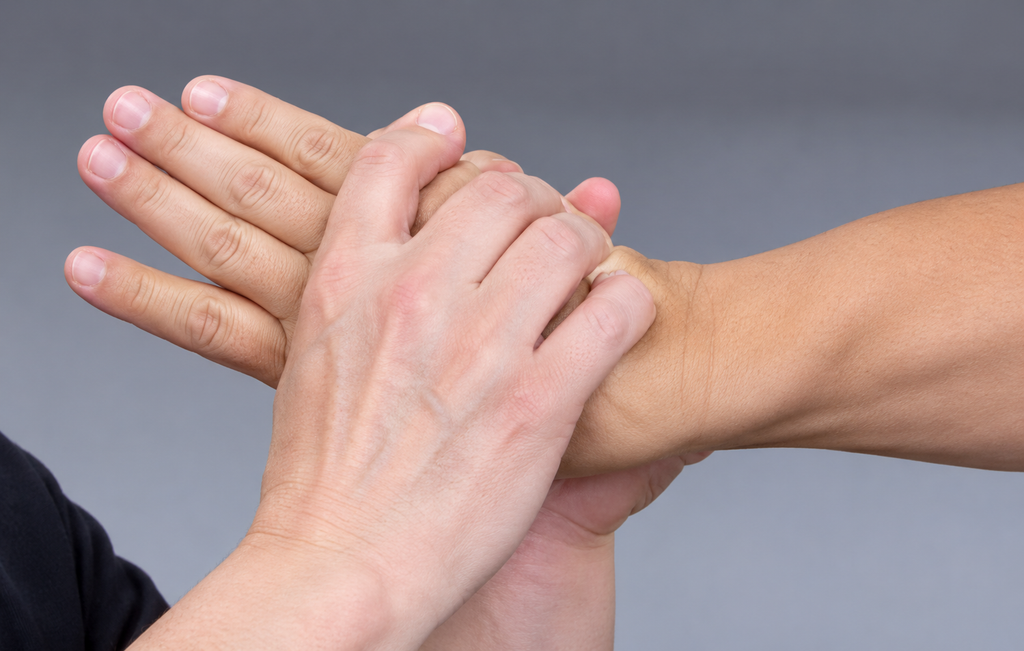
  • Thumb lock – This strategy involves relaxing your palm so that you can wiggle your hand into a position where it can grip the other person’s thumb and apply the joint lock.
  • Fourth-finger and pinky lock – When shaking hands with someone who is trying to dominate you and whom you feel you need to teach a lesson, reach out with both hands and target the person’s last two fingers. Twist them so that their palm faces upward. Practice slowly! This can really hurt.

How to hold a fist

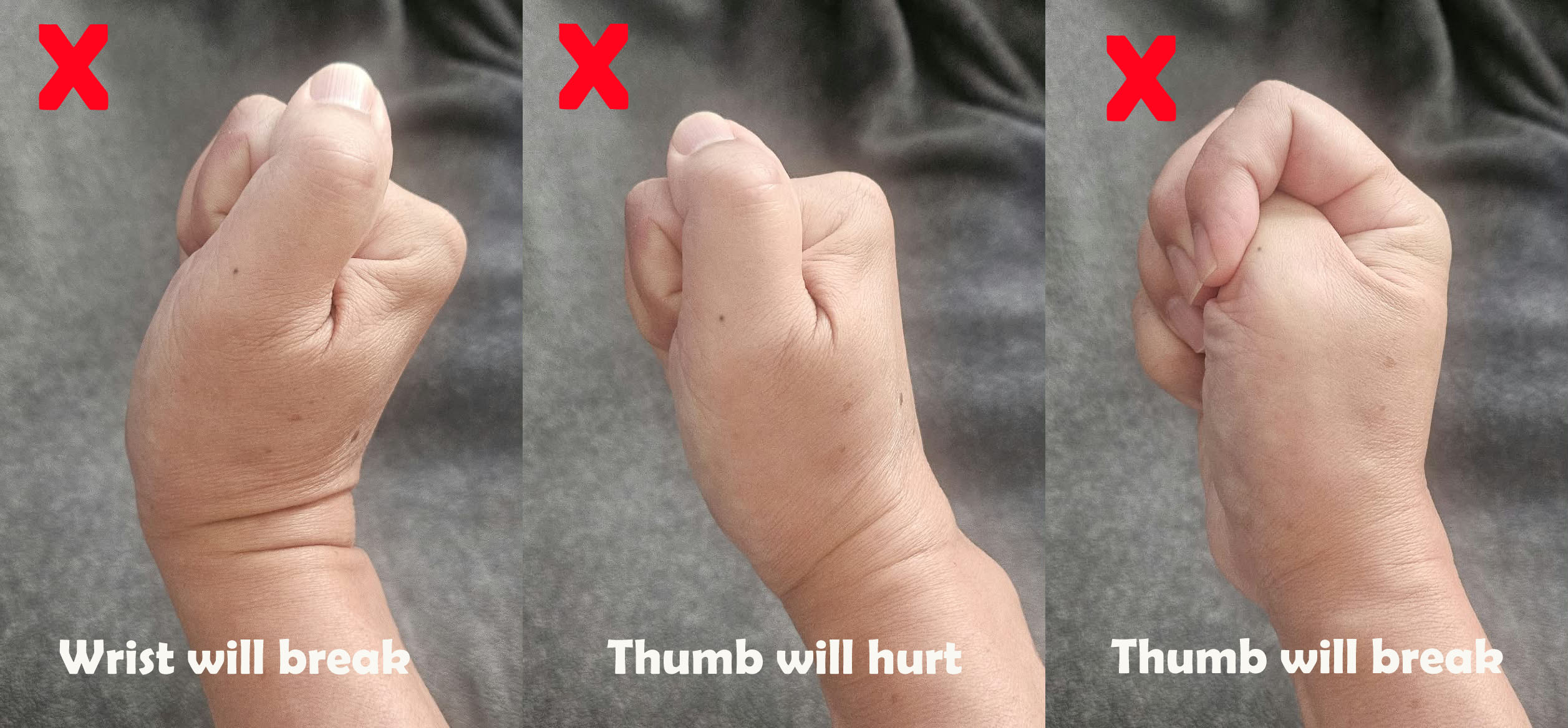
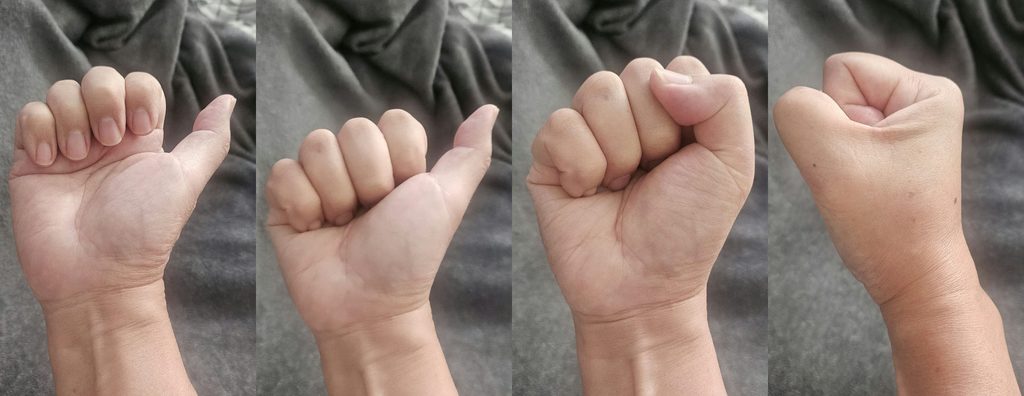
Fold all your fingers (without the thumb) tightly down so that the fingertips touch the base of the fingers. Then curl the fingers further to form a tight fist.

Your forearm, wrist, and knuckles should form a straight line. When making contact, the impact should be focused slightly more on the index and middle finger knuckles, rather than the pinky knuckle, which is more fragile.

Causing Pain

  • Solar plexus – Most kids who have played soccer have probably been hit by a soccer ball at full speed at least once. The impact can cause the diaphragm to spasm, leaving you feeling as though you cannot breathe. A focused strike to this area can cause a person to bend over and struggle to recover for a short time.
  • Throat – Jabbing your fingers into someone’s throat can cause severe damage. From my experience, however, in many cases, simply applying pressure while firmly saying “STOP IT!” may be enough to get the desired effect.
  • Upward nose strike – A direct strike to the nose can cause a fracture. Pressure from below may cause a person to tilt their head backward to relieve the discomfort, potentially leaving them vulnerable to further attacks.
  • T-junction area – Behind the jawbone, you can find a soft-tissue area. Applying pressure to this area can cause significant pain.
  • Groin – We have all seen accidental hits to the groin cause even a big guy to drop to his knees. So yes, a hit to this area can be very painful. However, you need to be very close for it to have any chance of connecting. Furthermore, this is a well-known target because of the movies, so it is not necessarily as effective or unexpected as some people might think.
  • Mid-thigh – There is a sensitive area around the middle of the thigh where nerves can be affected. Direct impact to this area, such as from a knee, can cause significant pain.
  • Triceps grab – Grabbing the skin around the upper arm and squeezing while pulling can cause considerable pain.

Delivery of impact force (E = 1/2 m v2 ) and Pressure

TThere are a few points to keep in mind when looking at impact:

  • Looking at the formula, you can see that kinetic energy depends on mass (your body mass) and velocity (speed at the time of impact).
  • Notice that velocity is squared in the formula. This means that an increase in speed has a much greater effect on kinetic energy than the same proportional increase in mass.

When discussing impact and pressure, it is also important to consider the contact area. The same force applied over a smaller area produces greater pressure.

EXERCISES

To improve the quality of your stretches, remember the phrase “We Love Pizza, Lots of cheese” and what each bold letter represents. In class, we focused on the following areas:

  • Hamstrings
  • Inner thighs and opening up the hip joints
  • Quads and hip flexors

Static push

Static Push

This is classified as an isometric exercise. It is a great way to train your body to maintain structural integrity when delivering a push. Common mistakes include allowing force to leak through the joints instead of maintaining a connected structure.

Backward Crawl

This is a great way to develop functional arm strength. In some ways, it also works muscles similar to those used in a plank. Make sure your elbows are bent and your body stays relatively flat. Otherwise, you are simply relying on your body structure to support yourself.

Besides this basic version, there are many additional exercises you can develop from here.

SIDE NOTES

No classes are offered during the winter months. However, if you would like to stay in touch, discuss anything you may have forgotten, ask questions, or receive notifications when classes resume, I can create a WhatsApp group for this purpose.

Let me know if you are interested!

SSD Class notes – 2026-10-01 Confederation

DISCUSSION

Stretching

A lot of people view stretching as the goal, but really, stretching is an activity. You can have different goals, and those goals can be accomplished through stretching. Examples are:

  • Therapeutic stretches — After an injury, a physiotherapist may prescribe specific stretches to release certain muscle tightness.
  • Maintenance stretches — During a holiday, you don’t want to spend too much time stretching, but you do want to at least maintain the flexibility you already have.
  • Protective stretches — Before an active game, you want your body to be able to move through the range of motion required for your sport, helping to avoid injuries. You are not stretching to any extreme positions, but simply getting the body ready to perform through its required range.
  • Development stretches — The intention is to go beyond the flexibility that you normally have. You will be exploring new territory and a range beyond what you can normally do. This is where the phrase “Explore the last inch” applies.

We went through the details of the following stretches:

  • Neck and shoulders
  • Lower back
  • Legs and hips
    • Hamstrings
    • Groin
    • Hip flexors

CONCEPTS and PHILOSOPHIES

Magic of Yes and ..

We talked a lot about the advantages of absorbing, redirecting, and going along with the forces of the aggressor. We also talked about the need to “technically relax and calm” ourselves in a confrontation. I know that, at this point, it is not natural for you because, your whole life, you have been taught otherwise. Therefore, we experimented through wrist-lock escapes, the differences between different types of responses when you push me, and many more exercises.

Saying “YES and …” starts to blend the desirable state of response you learned from “self-defense” into your normal daily life. Think of how many times you get into an argument (fighting) with your family—kids, spouse, parents, in-laws, etc.—because you are simply using your gut response rather than a goal-oriented, strategic response.

Do give it a try. The trigger is: every time you feel irked, breathe, and then think of a better response. Once you manage to at least pause and think, you will notice that you are on the path to training this seemingly impossible reversal of a default reaction. The classes and physical drills with partners will also help blend what you learn into becoming part of who you are.

Tagging

We use “tagging” to mean creating a moment where the opponent is so distracted or disrupted that he cannot respond effectively.

A term more familiar to most people is “feint” or “trick.” I think these are too specific. They are only a small subset of the many ways you can create a freeze/misdirection effect.

An effective tag can create an opening that was not there before.

Examples include:

  • Disturbing his balance
  • A sudden loud yell
  • Blocking his vision with your palm
  • And many more

The important thing is not the particular tag. It is the effect it creates.


Importance of Play Mode

It is interesting how quickly your mental state can change—as if there is a switch in your brain.

Learn to harness that switch and you can become much more effective in dealing with people and situations.

As an experiment, I tried this with one of you using the game “slap hand.” She was surprised by the result. She described it as feeling like a shock going through her brain: suddenly alert, with work mode completely switched off.

This can also be useful in everyday life.

Getting your parents or kids to work out can be one of the hardest sells—even when you know it is good for them. Instead of talking or preaching to them, try playing with them.

(NO, I don’t mean slapping them, even though there may be some rare situations where that thought crosses your mind!)

You may get much better acceptance—and you may even have fun yourself.

You can also use play mode for yourself. Track your progress and celebrate small accomplishments. Think of the little stars kids get when they accomplish something.

It works for kids. It also works for almost everyone. You just need to be smart about it.

Focus on your goals not the noises

When confronted with a push or a punch, our attention naturally goes to the attack.

  • How do I block it?
  • How do I stop it?
  • Can I react fast enough?

This often causes us to tense up because blocking requires precision, speed, and power. Worse, we may forget that we have another tool to stop the attack: our counter.

A better way is to look at his vulnerabilities that you can target. That usually means everything EXCEPT his attack. This opens up endless options.

If you treat the attack as simply “noise,” reduce the effect of his attack and tune it out, and focus on how you can hurt him instead, your confidence will increase dramatically.

This same strategy can be applied in your daily life as well: instead of focusing on the irritation a problem creates, focus on getting to the end goal.

SKILLS & SCENARIOS

Wrist Lock

If you go onto YouTube, you can easily find many examples of wrist locks. However, quite a few are questionable because they are relatively easy to escape from.

Individual differences in flexibility, combined with differences in how the mechanics are applied, can greatly change the time and effort required to secure the lock. Some of these examples may therefore be dangerous, or simply unusable, if the attacker is stronger than you.

For us, it is important to separate two things:

  1. Entry — How do you get your opponent’s hand into the position required for the lock?
  2. Execution — Why does the lock work anatomically, and how do you efficiently and effectively secure it?

You can have many different entries into the same execution.

For many people, all these combinations are classified as different techniques. For us, they are simply different entries into the same specific lock.

In class, we experimented with three different entries:

  1. Hand on shoulder — same side
  2. Hand on elbow — same side
  3. Wrist grab — same side

The goal is not to memorize three techniques. It is to understand the entry → execution relationship.

Cannot Be Lifted Individual

We experimented with two men trying to lift a female who was much lighter than either of them.

When she tightened up, it was relatively easy for them to overcome her body weight and lift her.

However, when she was instructed to relax and gently wiggle her shoulders and body, she suddenly felt much heavier and became almost impossible to lift.

The wiggling serves two purposes:

  1. Absorb the lifting force — rather than resisting the force directly.
  2. Prevent a firm grip — the constant movement makes it difficult for the lifters to establish a stable grip from which they can generate power.

This is a good example of why so many of our defensive skills are based on two things:

Relaxation + understanding mechanics.

This is counterintuitive and certainly not our default response. That is why it requires practice.

The goal is not simply to learn a technique. It is to train your body to respond differently when force is applied.

SIDE NOTES

I hope you will try to read the notes from Bonsor. Ask questions if you are curious.

SSD Class notes – 2026-09-24 Confederation

ADMINISTRATIVE

We are halfway through the Fall season program already. It seems like having only six classes seems to be rather rushed. If you are ever late because of traffic or whatever the reason, do not be shy, please do still come in. If you miss a class, do use these notes – ultimately, it is more for you than it is for me. 🙂

KEY CONCEPTS

Inducing Pain

You are in a self defense class. While I aim to defuse the situation as much as is possible, it is important to realize if defusing the situation doesn’t work, you have no other option but to escalate.

The following is the list of options to handle the encounter (not all options are available in every situation):

  • Avoid being a target by projecting confidence, resourcefulness and alertness. Alertness gets you prepared for trouble.
  • Round up available resources. For example, walk towards places with people or where you can be seen, any keys or pens in your pocket? Don’t be shy or embarrassed about attracting attention.
  • Ultimately, there may be situations where you have to hurt him to get him to stop.
    – You must know what hurts,
    – You must make that tough decision, and
    – You must have the ability to cause serious damage.

Taking Impact

If you hit a fully inflated basketball, you will feel that it is hard and that it can hurt your hand. In contrast, a deflated basketball is soft and yields when you hit it.

When you are hit in the chest, you want to breathe out quickly and forcefully, allowing your chest and rib cage to yield as much as possible to the incoming force—similar to a deflated basketball.

Notice in the following animation how the rib cage appears to fold downward. This downward movement helps create the necessary space between your chest and the opponent’s attacking arm. This can be especially useful when you are pressed against a wall, where you cannot simply move backward to create space.

SKILLS & SCENARIOS

Wrist Lock Against Hand on shoulder

When you are facing your opponent and they place a hand on your shoulder, your objective is to get free while gaining control of the situation.

One option is to raise your arm all the way up. Your shoulder will naturally rise with the movement. Allow the shoulder to rise and press it toward your own face without tilting your head.

Your opponent hand will be retained in a vertical position between your face and shoulder. You will notice that their hand conforms to the surface of your shoulder and therefore vertically oriented, with the pinky finger toward the top. At this point, add your other hand to secure their wrist so that it cannot slide away.

You can then rotate their wrist while keeping the pivot point in place. This can create significant pain and stress on the wrist, so practice this very carefully and with minimal force. Your partner should be able to release or signal immediately if the pressure becomes uncomfortable.

Two-Handed Grip on a Single Forearm — Low

If the aggressor holds your arm with both hands, it can be difficult to get free using muscle strength alone. The common reaction is to yank backward. However, this can trigger his whole-body involvement, making it even harder to escape.

You can, of course, resort to punching and kicking, but that may not be your intent. Your techniques and choices should be scalable. Punching and kicking are not easily scalable: once you start, there may be no going back.

A much gentler option is to project toward the fingertips, use your wrist as a pivot, and lower your elbow using your entire body without moving the pivot point. The amplification ratio can be quite effective and should work against many people without requiring a great deal of muscular force.

Again, once you are free, take control and move to a strategic position.

2 vulnerable pain points

Sometimes, you may have tried every reasonable option, but the aggressor simply will not let go. At that point, we may need to introduce a higher level of pain as a deterrent.

There is an important distinction: minor pain may simply irritate an aggressor, while sufficiently strong pain can deter without necessarily causing permanent injury. The objective is to create an opportunity to disengage and get to safety, not to cause unnecessary injury.

In class, we explored two additional vulnerable areas besides the groin and eyes:

  • Solar Plexus — If you bend your index finger into a phoenix-eye fist and apply pressure to your own solar-plexus area, you can quickly appreciate how sensitive this area can be. If you played soccer as a child, you may remember that taking a ball directly to this area can temporarily make it difficult to breathe.
  • TMJ Area — The area around the temporomandibular joint (TMJ), near the corner of the jaw, contains sensitive nerves and soft tissue. The general target is the softer tissue beneath the jawbone near the joint, where controlled pressure can produce significant discomfort.

De-stabilize your opponent (via Pushhand / Tui Shou (推手) practice)

When a person loses their balance, their ability to attack is severely affected. Learning how to absorb force while simultaneously destabilizing your opponent is therefore a valuable training method.

This exercise of discovering your own balance as well as your opponent’s balance is often called Push Hands, or Tui Shou (推手).

We experimented with it a little in class and gained first-hand experience of what it feels like to destabilize someone without using a lot of force.

Guard Stance and Angles: By default, you should maintain an offset stance so that one side is leading. Keep the shoulders and hips aligned over the feet along a diagonal line, so that you are not facing your opponent squarely.

Both elbows should be bent to approximately ninety degrees relative to the upper arms. Keep your fingers pointing outward toward your opponent.

Tuck your chin so that your forehead is forward—not your nose or chin. Avoid allowing the elbows to flare outward, both to protect the ribs and to maintain readiness.

Target Movement vs. Blocking: The core defensive principle is to prioritize moving the target (your body) over blocking. Blocks may fail if they are initiated too late or against a stronger force. Even one inch of target movement can change the outcome.

Rotating the body forty-five degrees can redirect the force immediately and reduce its impact by 50%. If you keep your hands busy simply blocking, the aggressor faces no threat and therefore has less reason to stop or hesitate.

EXERCISES

Squat

A low squat can be quite taxing. Our version does not involve bouncing up and down, helping to reduce unnecessary stress on the knees. Instead, we stay in a deep squat position, with the thighs almost parallel to the ground.

Hold the position until you feel the muscles begin to burn and your legs start to shake. When you reach that point, begin a slow count of eight, then slowly return to a standing position.

This exercise develops the strength and endurance of the thigh muscles. We do not aim for a specific duration or number of counts because everyone has a different starting point. My strategy is to let your body tell you where that point is. When you reach the point where you are struggling but can safely persist a little longer, you are also training your brain’s ability to push a little further—sensibly and without forcing it.

Backward Crawl

Instead of simply crawling backward, this week we will keep the arms bent during the crawl. You will find that adding just this one detail increases the level of difficulty considerably.

Bicycle hands

Instead of doing it exactly as we did last week, this week we want the knees to remain bent. The power driving you forward should not come from simply taking casual walking steps, but from using the leg muscles while maintaining bent knees.

SIDE NOTES

You may find our Seniors Corner YouTube channel helpful, especially for topics such as fall prevention and what to do if you fall.

Please take a look, give the videos a thumbs up, and subscribe if you find them useful. It will help the channel reach more seniors.

If you have older parents or family members, please consider sharing the videos with them as well.

Seniors Corner – MartialGym

SSD – Class notes 2026-09-17 Confederation

KEY CONCEPTS

Take the Target Away / Blocking Is Bad

For defense, if you try to block every attack one by one, you are bound to miss some. Furthermore, the blocking mentality is flawed because a significant part of the movement is non-productive until your arm actually makes contact with the attack. Even then, you cannot be sure that you will be able to move the attack away.

A more productive approach is to move the target away in any direction. Every inch of movement or turning contributes toward the goal of reducing the damage.

Make Yourself Smaller and Angle Yourself to the Front

Everyone knows that if the target is large, it is much easier to hit than a small target. As a general strategy, you should therefore tuck yourself in slightly and angle your body so that a straight attack will naturally be deflected.

On top of the angling, if you make unpredictable movements in different directions, it becomes even more difficult for someone to land a solid punch on you.

Conserve energy

When you watch a group of people walking normally, you will see differences in their movement mechanics. We generally don’t tell someone, “You are doing it wrong,” until they develop a problem, such as lower-back pain, knee issues, or balance problems.

In martial arts, as you age, you know that your muscle mass, speed, and cardiovascular capacity will naturally decline over time. It is therefore important to explore ways to make our movements more efficient.

In class, we experimented with a hopping style of leg switching. Everyone was panting within a minute or so. Then we tried it with a slightly different method: we “hopped” without trying to jump upward. Attempting to jump up not only uses more energy, but also slows you down at the same time.

Relax to absorb the incoming force vs tensing up to resist

When someone pushes you, most people’s instinct is to tense up to resist and fight back. However, because of leverage, you are actually making your opponent’s push more effective. You should instead relax, breath out and allow your body to turn or lean back slightly with his force. You will find that his attack is absorbed and you will be able to stand your ground without tension.

Relative speed

Having muscles do help you run faster. You must do conditioning consistently to raise your base level fitness. However, the bully is usually stronger and bigger than you and that is why he picked you.

To improve the probability of a hit landing on the intended target, your strikes need to be fast. The following are some of the things you can do “to hit faster than your opponent”.
– hide your start time, i.e. do not telegraph
– distract where possible
– shorten the distance where possible
– relax so that you are not working against your own body

Be prepared to pay a price

Even if you are a good fighter, there is a priced to be paid even if you do win. Given that in a street situation, you do not have time to warm up, or find out more about your opponent. If you are not 100% ready with a lot of unknowns, you probably may not be performing at your best.

In a world tennis event, you do not see 6-0, 6-0s all the time. While playing tennis means you lose a point or game, in fighting, the points that you lose be give you a bloody nose or whatever. Furthermore, have you thought of the time for the after-the-fight legal entanglements? All those are prices that you pay.

Given that it is not free even if you win and even worse, you are not guaranteed success, Before you escalate, you must decide if it is really worth it. Because of this consideration, do put more effort in avoiding a fight instead of flipping that switch on easily. And if you do fight, make sure you are 100% committed to ensure he pay a hefty price to pick on you.

SPECIFIC SKILLS

Bicycle Hands – This is a continuation of last week’s drills. Take note of the following common mistakes and points of emphasis:

  • Keep your chin down – hits will land on your forehead rather than on your chin or nose.
  • Start with single strikes, slowly. Check the correctness of each strike before moving on. Rushing takes away your opportunity for self-assessment.
  • Progress from singles to combinations. After practicing the singles, do them in pairs: pop-pop, pop-pop. Then move to groups of three: pop-pop-pop, pop-pop-pop, followed by groups of four, and eventually continuous strikes.
  • Progress from slow steps to fast steps. Start with slow footwork, but eventually you should be taking fast steps with the intention of chasing your opponent down.
  • Do not move your hands side-by-side. Practice the movement as hand-over-hand, so that one hand follows the other.

Leg switches – This is a good cardio as well as mobility exercise. Whatever duration you choose, try to do 3 sets with one minute of rest between sets.

Take note of the following common errors:

Pausing between switches. There should be no rest between switches. Switch as soon as both feet land.
Wasting energy by jumping up and down. Try to maintain the same level rather than unnecessarily moving up and down.
Keeping the body static. The switches should not be done with just the feet moving. Your hips should turn together with the leg switches.
Swinging the arms in the opposite direction to the legs. The arms and legs should turn in the same direction.
Landing one foot at a time. Both feet should land at the same time.

Zhan zhuang 站桩

Zhan Zhuang is a common exercise practiced by seniors for health and conditioning purposes. It is also used by Yiquan practitioners to develop power for martial applications.

In our lineage, we also use Zhan Zhuang for healing purposes, as well as for martial power development.

In our lineage, we also use Zhan Zhuang for healing purposes,as well as for martial power development. It is a good tool to develop and understand “sinking”, “structural force” and “one thought.”

Some key concepts and reminders to keep in mind are:

  • “Blow air into the balloon”
  • “Three balls”
  • “Sinking the elbows”
  • “Relaxing the shoulders”

SIDE NOTES

Class notes for Bonsor has also been posted. Go check it out. Can you understand it? Let me know what you think.

SSD – Class notes 2026-09-10 Confederation 

These are the class notes for the self defense class at Confederation Park.

PRINCIPLES & CONCEPTS

The Three Elements of Power: True power integrates three sources:

Biomechanics (physical movement of muscles, bones and body mass),
Psychomechanics (how mental focus and visualization alter physical execution), and
Nature & Environment (connection to the ground for stability and using relaxed, focused force). Understanding these allows one to be effective beyond raw strength.

The Principle of Relaxation vs. Muscle Tension: A core concept is that an impact effective force comes from relaxation, flow, and mental focus, not brute strength. Tensing up leads to stalemates, while a relaxed, “flow” state disrupts an opponent’s balance and expectations, making techniques more effective even against a stronger person.

Using Leverage vs. Strength: This principle focuses on using the body’s structure and pivot points (like one’s own feet) to gain a mechanical advantage. By applying force far from the pivot, a smaller person can unbalance a stronger one without engaging in a direct strength contest. This is a key reason to avoid “Point-to-Point Fighting”—a direct, strength-on-strength confrontation.

Adding Power of the Mind: We tried two experiments: One is with a straight arm projecting past the fingers, the other one is heavy elbow. Both scenarios, we compared the difference between focusing on muscles working against an incoming force vs taking your mind off the muscles but focus on the effect you are trying to create.

Strategic Positioning & Attacking to Disrupt Balance: This is a tactical principle focused on moving to a safer, more advantageous position relative to an opponent (e.g., to the side to avoid direct strikes). The goal of an attack is often not to cause injury but to disrupt the opponent’s balance and control by targeting areas that create an instinctive, destabilizing reaction.

Pushing Mechanics, Leg Drive & Energy Leaks: Effective pushing requires driving from the large muscles of the legs (thighs, glutes) with a bent back leg, not just leaning with the upper body. In fact, leaning can half the effective body weight against an opponent or object just like the mechanics of moving dolly. Structural integrity must be maintained to avoid “energy leaks,” where a joint (like the wrist) bends backward, dissipating power.

Non-telegraphed Movement: This refers to eliminating preparatory signals before an attack. The goal is to integrate stepping and pressing into a single, seamless motion so that force is delivered simultaneously with movement, giving the opponent no time to react.

Adaptability & Practical Application:
The overarching philosophy is that survival and effectiveness come from adaptation, not brute strength. The principles of leverage, balance, and efficient energy use are foundational concepts applicable not just to self-defense but also to everyday physical tasks like moving furniture or pushing a heavy door.

SPECIFIC SKILLS

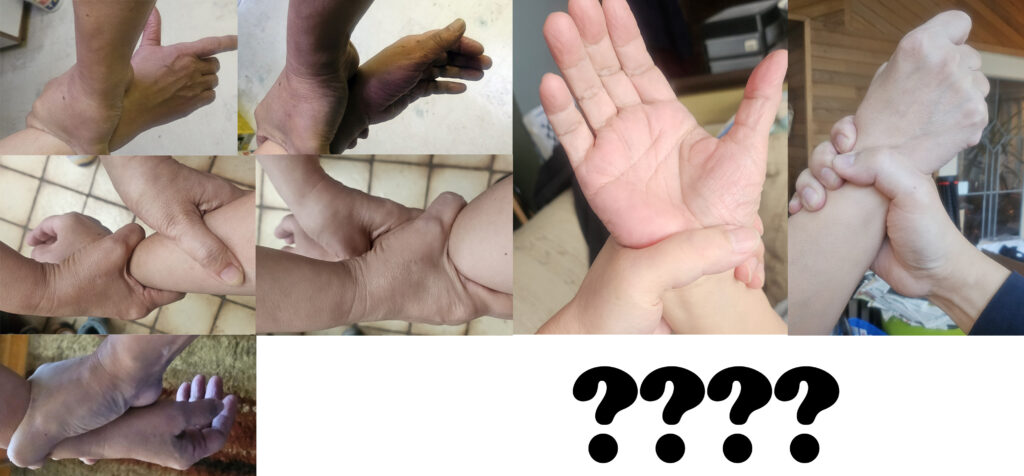
Wrist Release & Grip Escape Techniques: A set of defensive techniques to escape wrist grabs by using physics and leverage. The core idea is to manipulate the opponent’s grip by relaxing, creating stress on their thumb (e.g., by pointing fingers down), and using structural alignment (e.g., lifting the elbow) to break free without muscular force.

Bicycle Hands Drill: A continuous, chain-punching drill where hands cycle in an oblong motion along the centerline. It teaches how to maintain an offensive flow, clear an opponent’s blocks, and protect one’s center by keeping the elbows down and in.

The Pendulum squeeze. Just like a pendulum, the following concepts are applied: 1) Anchor the pivot. 2) Settle downward matching your Center of Gravity with the path of a pendulum bob. 3) Just as important, make sure there are no leaks.

Palm strike to the nose: When desperate and in-close, an upward strike to the nose of the aggressor can be very effective and if done with full body power, it can actually flip him up and backwards.

Finger stab to the throat: Fingers pressed hard against an aggressor even without stabbing hard can be quite unnerving. This technique has been used against bullies in real life scenarios.

SIDE NOTES

Please try to come to class 10-15 minutes earlier if possible since the room is available. We can use it to ask questions, warm up and even do some partner drills to see if skills that worked last week still works this week.

Do let me know if the you like the class duration being 1.5 hours or do you prefer the standard one hour slots.

Does the current start time work for you or you prefer a little later because of traffic.

We are planning for the winter session at confederation. If the classes are strictly for seniors, the possibility of having snow and ice on the cold winter nights doesn’t seem to make sense for me. However, looking at the class we have now, it seems like all of you are reasonably young and capable, I am wondering if I am worrying too much. Your feedback is much appreciated.

SSD – Class notes 2026-05-07 CSC

DISCUSSION

Walking Mechanics and Butt/Foot Engagement: Walk purposefully. Push through your toes to engage the gluteal muscles and stabilize the foot and ankle. Avoid flat-footed steps; instead, use the same amount of time (e.g., 20 minutes) more productively by emphasizing toe push-off and maintaining a steady cadence.

This is especially useful if you already walk regularly. It improves the efficiency and exercise value of each step you take. An additional benefit is that you will naturally walk faster without consciously increasing your pace.

Fall Prevention and Relaxation: Fall Prevention and Relaxation: People fall because they tense up. They try to STOP the fall instead of going with the flow force.. When lightly pushed/pulled on the shoulder and space allows, all it takes is to step with the flow forward/back/side to rebalance.

Relative Distance: Some of you may have already noticed that when the wrist grab is strong and the attacker is pulling while walking backward, the technique feels more difficult. If you move with them and maintain the distance between you, the contact on your wrist remains stable. Therefore, you simply have to keep up so that the distance between you does not change.

SCENARIOS

Escape from frontal elbow grab across center line – Treat it like the low crossover wrist grab where you simply draw around the opponent’s wrist. In this case, you will put your entire forearm over past his forearm and then relax downward.

Escape from elbow grab from your side (his right hand to my left elbow) – Use shoulder-to-shoulder turn and walk the opposite way. While a different body part is grabbed, the concept is the same as the “same-side low grab”.

EXERCISES

Having a strong physical foundation is important for health as well as for self defense. This represents your “resources” in the LRT model. You not only have to do the best you can to retain what you have but you need to train your eyes and brain to be able to see and work within that context.

For example: Do you have ways to deplete your opponent’s resources while preserving or amplifying your own? Do you know how to take advantage of your environment so that it works in your favor?

There are still lots to explore!

SIDE NOTES

Yes, today is the last class of the early spring session. We have also added a new 4-class session to the calendar, running from June 11th to July 2nd.

In this upcoming session, we will continue to explore efficient movement in a self-defense context, how to generate and deliver more power, and spend more time reinforcing the skills you have learned until they become automatic. Hope to you in the next session and please pass the word around, we need at least six participants minimum.

If I don’t see you, enjoy a great summer! Stay safe!

SSD – Class notes 2026-04-30 CSC

DISCUSSION

Situational Awareness, Space, and Time Management:

One cannot label a specific situation as simply good or bad. What truly matters is the relative difference between you and the aggressor—your surroundings, the distance between you, the availability of potential help, your level of mental and physical preparedness, and, perhaps most importantly, whether you can detect early signs of trouble. All of these factors influence your chances of success or survival.

I don’t want any of you to become skittish or constantly nervous, as if there were an attacker right behind you all day. However, setting aside some time each week to sit on a street with a coffee and engage in people-watching can be both enjoyable and beneficial. This is what I call “training your eyes,” or the “L” within the LRT model.

Some examples of what to observe include: What does a confident person look like? Among the people around you, who appears more likely to be targeted? In a group of teenagers, who is the leader, and who seems most aware of their surroundings? What can you infer from people’s walking mechanics and posture? For example, among seniors, can you identify who may be starting to have balance issues? Finally, if you needed help, who would you choose to approach?

Boundary-Setting and positioning:

When someone walks aggressively toward you and begins yelling, should you back away to maintain distance? I recommend moving laterally rather than straight back. Retreating directly backward can signal submission and may encourage the aggressor to continue advancing.

Maintain a discreet guard by using natural, non-threatening movements—such as touching your face or scratching your neck—to position your hands without escalating the situation.

Use loud, clear verbal commands and simple narration (e.g., “Stay there,” “I’ve already called…”) to establish boundaries. This not only communicates your intent but can also draw attention from bystanders and help clarify who the aggressor is.

Strategic positioning

During wrist-grab escape drills, I always remind my students not to stop immediately after the escape. You must step and reposition yourself strategically. Furthermore, maintaining a relaxed demeanor—such as a slight smile—while repositioning and applying follow-up techniques can help keep the confrontation at a more controlled, civilized level.

Avoid standing directly in front of the aggressor in a confrontational manner, as this increases the risk of a follow-up grab or strike. The “step to the side and place a hand on the shoulder” method serves a clear strategic purpose. A face-to-face position is often perceived as confrontational, whereas aligning your body in the same direction and verbally redirecting the person’s attention can create a subtle psychological shift. This may encourage them to reconsider their intent or disengage altogether.

Body Mechanics and Structural Leverage

As we age, relying solely on muscle strength means depending on a diminishing resource—it is not constant over time. Physical condition can also vary from day to day. Even if you are strong compared to others of a similar age, an adversary may target you precisely because they are younger, stronger, or faster.

To protect yourself with a reasonable chance of success, you must make use of everything that contributes to your overall strength. Beyond muscular power, this means applying proper body mechanics to maximize efficiency and structural leverage.

Equally important is maintaining a calm, adaptable mindset. The person you are facing will likely be very different from your regular training partner, and your ability to relax and adjust in real time is critical.

How to Overcome Reach Challenges

If the aggressor is taller and has longer arms, you will need to find ways to close the gap in order to access effective targets. While they clearly have a reach advantage, there are still practical strategies you can apply:

Relax and allow your shoulder to rotate naturally with your punches or strikes. This can add several inches to your effective reach without compromising balance.

Although your opponent’s arms are longer, that length can also work against them. With proper leverage and timing, you can still affect their structure efficiently once contact is made.

While the legs can provide greater reach than the arms, I have strong reservations about recommending kicks for seniors unless they have trained them extensively. Many seniors already face an increased risk of falling, and striking with one leg while relying on the other for balance introduces unnecessary risk.

Use positioning and timing to your advantage. Creating an opening—whether by appearing less guarded or by controlling distance—can prompt the aggressor to overcommit. This can give you a brief window to act decisively.

Lowering your level can sometimes draw the aggressor downward. When they lean in, they may enter your effective range, allowing you to engage more safely.

SCENARIOS

Grip Releases

Most Common Mistakes in Escape Drills:

  • One of the most common mistakes is failing to assess the situation at hand and instead mechanically applying a technique that may not suit the context..
  • Another frequent error is resisting the grip with brute force in an attempt to overpower it. Learning to relax and think under pressure is often more difficult than simply imitating movements. However, this ability can be developed through repetition, understanding the underlying mechanics, and applying them adaptively. True adaptation must become a trained instinct, which takes time and conviction.
  • Resisting directly at the contact point and forgot gain the leverage and power through separation of moving parts and non-moving parts..
  • You must also understand the structure of the grip itself. If you allow the thumb’s structural support to remain intact, you are effectively working against the strongest part of the grip. If you can disrupt that structure, escaping becomes significantly easier.
  • In everyday life, we are accustomed to gripping objects by closing our fingers inward, which makes that direction naturally strong. Attempting to pry the grip open directly requires considerable effort. However, if you apply pressure inward against the fingers, the grabber must resist outward—something most people are not prepared to do effectively.
  • Finally, when we “press,” we should not rely solely on hand or arm strength. Instead, aim to transfer your entire body weight into the point of contact. This creates far greater force and efficiency than using the arms alone.

EXERCISES

Plank is a good exercise that exercise the whole body. Do make sure you are doing it correctly to avoid injuring yourself.

SIDE NOTES

SSD – Class notes 2026-04-23 CSC

DISCUSSION

Using an Attacker’s Force/Redirecting Force: This principle focuses on redirecting an opponent’s momentum and force against them rather than meeting it with direct opposition. The core idea is to move with their pull or push, adding your own force to unbalance them, turning their aggression into a disadvantage. This helps amplify the effects of your delivery system, for example, if he is crashing into your direction, a hit in the opposite direction means that he is crashing into your hit and therefore the effect is the sum of your power AND his fall.

The Perpendicular Line Principle: This principle leverage off observing or feeling your opponent’s line of support. A line perpendicular to his line of support is where his support will be minimum and therefore becomes a vulnerability you can take advantage of. This disrupts their balance much more effectively than direct point-to-point opposition, requiring less strength. When someone loses his balance, his top priority instinctively is to attempt to rebalance, this help limit his options as well as his focus.

Small Joint Manipulation (Thumb Lock): This technique involves isolating a small joint, specifically the thumb, to gain control over an opponent. By pressing on a pressure point on the thumb and twisting it, one can inflict pain and force compliance, demonstrating that significant control can be achieved with minimal effort by targeting vulnerable areas.
The exposure you have regarding any type of locks is that there is a certain percentage of the population that has really flexible fingers. This means that it will take a lot more effort before you find the pain-point of another person and therefore may be easier to get out from that class of people.

Wrist Lock: This is a joint lock that involves controlling an opponent’s arm by bending their wrist and rotating their forearm. The key is to create a pivot point and apply pressure to spin the bones in the arm, locking the elbow joint. It’s a powerful control method that can be executed quickly and is effective even against larger opponents.

Strategic Use of Strikes (Nose Strike): This is a counter-attack strategy focused on disrupting an opponent’s composure and vision. A palm heel strike to the nose bridge causes an involuntary physical reaction (tears, disorientation) and obstructs their view, creating an opening for escape or further action.

Importance of Communication in Training: This logistical point emphasizes the necessity of clear verbal feedback (or double tap or saying “it hurts”) during partner training to prevent injury and ensure effective, safe learning. Especially for joint locks, if the angle is not correct, the person applying the technique will not know for sure whether it is done correctly without the feedback. As the person applying the technique, it is very important NOT to do it fast as you can cause damage or injury to a partner that is helping you train.

SCENARIOS

Falling

Unhooking a Tripped Foot: This is a specific procedure to recover from a trip by immediately using abdominal muscles to lift the tripped leg, rather than trying to push off. The goal is to quickly free the foot to take the next step and prevent a fall.

Proper Rolling Technique / Safe Falling: This is a fundamental movement skill focused on protecting the body during a fall or impact, such as crashing into a wall or a heavy fall onto the ground. The key principles are:

Roll to spread the impact over a bigger surface area – To roll, you must provide a sideway force on contact to get your body to roll.

Protect vulnerable, bony areas of the body, such as the heel of the palm, elbows, shoulders, knees, and tailbone. These should either be kept rounded or repositioned so that impact is absorbed by the softer, more muscular parts of the body—for example, allowing the fleshy part of the arm to take the force rather than the tip of the elbow.

Protect your head at all times—any direct impact to the head is unsafe.

Falling Backward

This simulation of a backward fall against the wall is to remove the fear of falling backward as well as to highlight the most vulnerable points from the fall. Key-points to note:

  • Your head – Injury to the head is no joke. You simply must protect this even if everything else fails. So make sure you are rounding the back with the nose pointing towards your belly button.
  • Your tailbone – if your spine and tailbone is point downward perpendicular to the ground, it will fracture and you will be great pain for a few months. Do push you knee forward and hip forward to help counterbalance the backward fall.
  • Do not relax until everything comes to a complete stop – if you release too early, it will have a whipping effect.

EXERCISES

Fall simulations must be practiced consistently so the response becomes automatic. If you need a refresher, refer to the front fall video on the SeniorsCorner – MartialGym YouTube channel. Practice the following scenarios daily:

  • Front fall against a wall
  • Front landing followed by a roll to the side against a wall
  • Backward fall landing against a wall
  • Tripping recovery (reset)

SIDE NOTES

SSD – Class notes 2026-04-16 CSC

https://ssd.martialgym.info

DISCUSSION

Establishing the Context and Expectations

It is important to understand the intent of this class so we have a shared understanding:

  • Not sport combat
    This is not a sport combat program. You will not be trained to adopt a guard stance or move in a way typical of competitive fighting (e.g., bouncing or circling).
  • Physical conditioning with realistic expectations
    You will develop strength and conditioning as part of the training. However, the goal is not to become stronger or faster than an aggressor because that is not something that can be planned. We are on a downward slope. I do not want to teach you something that may be valid this month but not over time in the future.
  • Movement and risk awareness
    While creating distance can be useful, simply running away is not always a reliable solution. In many cases, the aggressor is probably faster and more mobile than you. There are also environmental risks to consider—such as stairs, sharp turns, or uneven terrain—which increase the likelihood of losing balance or falling.
  • Confidence
    Confidence is something you must earn for yourself. No one can give it to you, no matter how much they care about you.
    You have to understand and practice to own everything that you were taught. It is a lot of work but the payback is that you will gain new perspective on how to use the body you own.
    You should not simply copy movements. Instead, strive to understand the underlying concepts and mechanics. This understanding allows you to adapt to different situations—and ultimately, to make the skills your own.

The emphasis of this training is on practical, realistic responses based on your abilities, positioning, and situational awareness.

Non-Combat Preparations

  • Prioritization and Preparation for Theft or Loss: Protect essentials, not replaceables; pre-plan to avoid risky reactions. Maintain phone/cloud backups, keep an extra credit card at home, and inventory cards on your phone. Do not chase faster assailants; prepare, prioritize, and let go when needed.
  • Instinct Management and Immediate Response: Train the instinct to relax, exhale, and assess before reacting. Most of the skills you learn here requires you to keep calm and think quickly and adapt with a cool head.
  • Maintaining Safe Distance and De-escalation: Set proactive personal space with hand gestures and clear statements (“I’d like to keep my distance”). Use verbal de-escalation, topic changes, and natural smiling; confirm bad intent via behavior tests (e.g., crossing streets to see if followed) and remember the avoidance steps and yet he still persist to justify any legal issues if you hurt him badly.
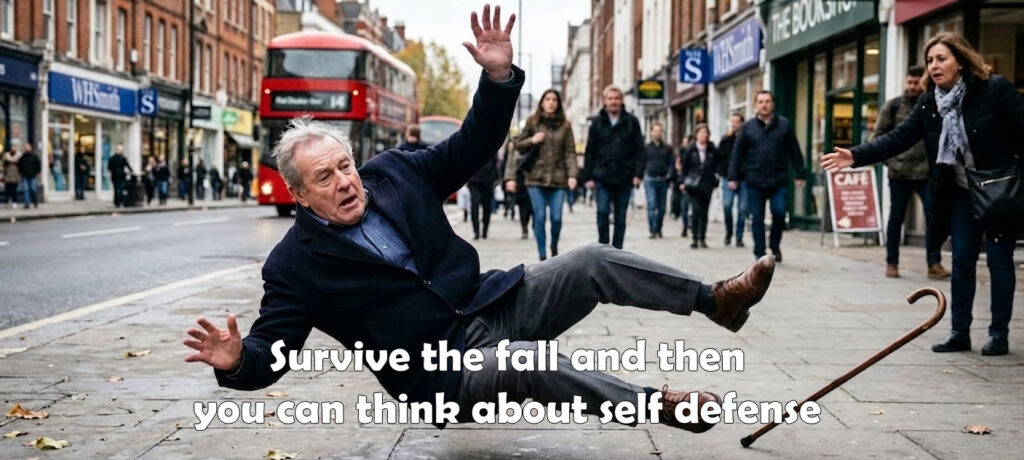
  • Fall-Prevention and Impact Absorption: One of the most common random attacks is a big shove to get you falling onto the ground. You need to survive that without injury to make any of the techniques you learned work.
    You protect yourself from the impact by distributing the force of impact over a big area and over time by slowing down the fall. Train to get your triceps stronger; use fingertip-to-palm contact with bent elbows; start near 90° joint angles, avoid acute angles, and absorb without passing unsafe ranges. Rolling is secondary; practice wall and ground absorption first.

Power of Mind and Body Working Together

While many people talk about the importance of aligning the body and mind, it is often left in abstract, philosophical terms. In class, we demonstrated this concept in a practical way, allowing everyone to learn and experience the differences for themselves. In short, we refer to this mental process as “projection.”

Train Slow to Change Habits

Learning a new movement pattern is not easy. Responding with that newly learned pattern under pressure is even more difficult. The idea of “relaxation” may sound simple, but it is one of the most challenging aspects of developing “effortless” power.

This is especially true when you are forced to react quickly—you will most likely revert to familiar muscle-against-muscle responses. However, as you age, this approach becomes less reliable and continues to decline over time.

A common reaction under stress is to tense up. However, tension—if not applied appropriately—can actually create leverage against yourself.

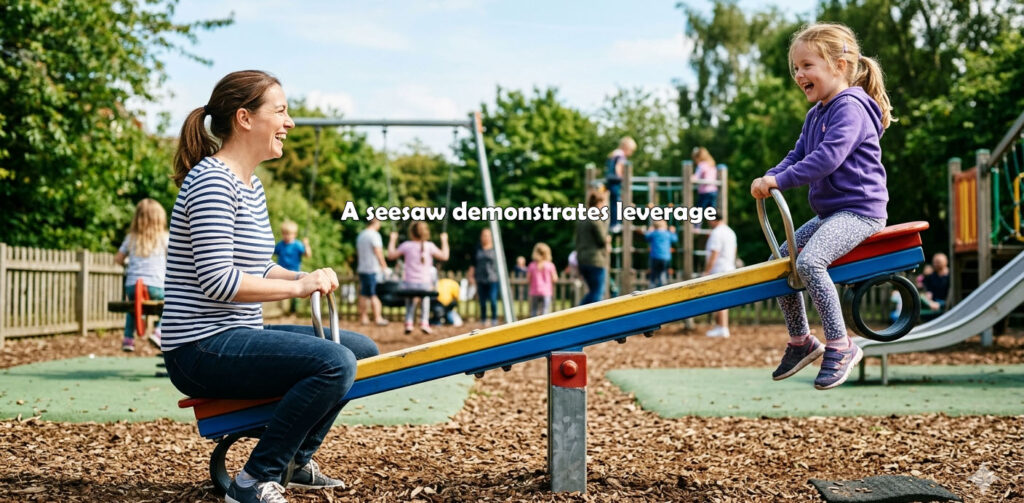
Consider a seesaw. In a fixed system, the pivot point stays in the middle, and balance depends entirely on the weights on each side. But imagine a “smart” seesaw that can adjust its pivot point or change the flexibility of the board. By shifting the pivot or altering tension, it could neutralize weight differences or even allow a single person to operate it effectively.

Relaxation functions in a similar way. It changes the entire leverage system rather than forcing you to work within a fixed one. This adaptability can disrupt the opponent’s expectations and create mechanical advantages that are not obvious.

Additionally, relaxation reduces telegraphing. When you remain relaxed, your intent is less visible. In contrast, excessive tension often signals that you are about to act, making your movements more predictable.

3 Principles of Self Defense (LRT)

L — Listen, Look
This principle is about awareness—paying attention to your surroundings using all your senses. Recognizing what is happening around you allows you to prepare and respond appropriately.

It also includes trusting and verifying your instincts. When your gut signals that something is off, use observation to confirm potential ill intent. Assess the situation: are you facing a one-on-one or one-against-many scenario? What can you see—and what might you not see? Make informed assumptions about relative strengths and weaknesses so you can plan ahead.

R — Resources
Resources include your skills, physical attributes, and available options. This covers your training in self-defense, your understanding of mechanics, and your ability to adapt to different situations and constraints.

Factors such as mobility, strength, reaction time, and speed all play a role. However, this is not just about your own capabilities—it is also about the gap between you and your opponent. The objective is to limit your opponent’s strengths while positioning yourself in areas where you have an advantage.

Planning is critical. Know your personal “red line.” Consider practical matters—for example, are you prepared to give up your phone or belongings if necessary? Be aware of environmental resources as well, such as exits, barriers, or objects that can assist your movement or positioning.

T — Target
This principle focuses on both avoiding becoming a target and understanding targets within a situation.

  • Do not become a visible target.
    Predators tend to observe and select individuals who appear vulnerable or isolated. This is not about restricting your rights, but about understanding the risks associated with certain behaviors.
  • Do not become a static target.
    Remaining still makes you easier to approach and attack. Movement forces a potential attacker to expend more effort and often discourages action.
  • Understand intent and outcomes.
    Try to identify the attacker’s objective. If the situation risks causing permanent harm to you or someone you care about, that may define your red line and you may have to act decisively. “Make him pay dearly” should be your mindset at that point.
  • Make decisive assessments.
    Quickly evaluate your options and, if necessary, identify actions that may cause the attacker to disengage or reconsider.

SCENARIOS

Low Cross Center Thumbs-up Grip – Relax the fingers and wrist, draw your finger tips around grabber’s wrist all the way, step and reposition.

Low Cross Center Over-hand Grip – Project through fingers, keep your arms slightly bent, big step in and elbow to elbow, handover and strategically reposition.

Low Same-side Grip – Project through the fingers, elbow-to-elbow and finger-to-belly-button to regain control without escalating force; big step to reposition strategically, smile and talk to change his intent.

Fall Protection Basics

We have to protect our head and hands when we fall forward. The most vulnerable body part is the wrist. If the arms are not fast enough or strong enough, then you may smash your face onto the ground.

  • Do remember the following keywords: Finger tip, finger, palm, elbow
  • Do use the video on our channel to help with remembering if you struggle.

SIDE NOTES

Do remember to check our YouTube channel “SeniorsCorner-MartialGym“. It is a new channel and I need your likes, comment and subscribe to get the word out so that more people can be helped by the videos.

Nobody is using the room before our class, so I encourage you to arrive a little early. This gives you time to warm up, work with different partners to practice techniques, and develop adaptability. You can also use this time to ask me any questions.