DISCUSSION
Establishing the Context and Expectations
It is important to understand the intent of this class so we have a shared understanding:
- Not sport combat
This is not a sport combat program. You will not be trained to adopt a guard stance or move in a way typical of competitive fighting (e.g., bouncing or circling). - Physical conditioning with realistic expectations
You will develop strength and conditioning as part of the training. However, the goal is not to become stronger or faster than an aggressor because that is not something that can be planned. We are on a downward slope. I do not want to teach you something that may be valid this month but not over time in the future. - Movement and risk awareness
While creating distance can be useful, simply running away is not always a reliable solution. In many cases, the aggressor is probably faster and more mobile than you. There are also environmental risks to consider—such as stairs, sharp turns, or uneven terrain—which increase the likelihood of losing balance or falling. - Confidence
Confidence is something you must earn for yourself. No one can give it to you, no matter how much they care about you.
You have to understand and practice to own everything that you were taught. It is a lot of work but the payback is that you will gain new perspective on how to use the body you own.
You should not simply copy movements. Instead, strive to understand the underlying concepts and mechanics. This understanding allows you to adapt to different situations—and ultimately, to make the skills your own.
The emphasis of this training is on practical, realistic responses based on your abilities, positioning, and situational awareness.
Non-Combat Preparations
- Prioritization and Preparation for Theft or Loss: Protect essentials, not replaceables; pre-plan to avoid risky reactions. Maintain phone/cloud backups, keep an extra credit card at home, and inventory cards on your phone. Do not chase faster assailants; prepare, prioritize, and let go when needed.
- Instinct Management and Immediate Response: Train the instinct to relax, exhale, and assess before reacting. Most of the skills you learn here requires you to keep calm and think quickly and adapt with a cool head.
- Maintaining Safe Distance and De-escalation: Set proactive personal space with hand gestures and clear statements (“I’d like to keep my distance”). Use verbal de-escalation, topic changes, and natural smiling; confirm bad intent via behavior tests (e.g., crossing streets to see if followed) and remember the avoidance steps and yet he still persist to justify any legal issues if you hurt him badly.
- Fall-Prevention and Impact Absorption: One of the most common random attacks is a big shove to get you falling onto the ground. You need to survive that without injury to make any of the techniques you learned work.
You protect yourself from the impact by distributing the force of impact over a big area and over time by slowing down the fall. Train to get your triceps stronger; use fingertip-to-palm contact with bent elbows; start near 90° joint angles, avoid acute angles, and absorb without passing unsafe ranges. Rolling is secondary; practice wall and ground absorption first.
Power of Mind and Body Working Together
While many people talk about the importance of aligning the body and mind, it is often left in abstract, philosophical terms. In class, we demonstrated this concept in a practical way, allowing everyone to learn and experience the differences for themselves. In short, we refer to this mental process as “projection.”
Train Slow to Change Habits
Learning a new movement pattern is not easy. Responding with that newly learned pattern under pressure is even more difficult. The idea of “relaxation” may sound simple, but it is one of the most challenging aspects of developing “effortless” power.
This is especially true when you are forced to react quickly—you will most likely revert to familiar muscle-against-muscle responses. However, as you age, this approach becomes less reliable and continues to decline over time.
A common reaction under stress is to tense up. However, tension—if not applied appropriately—can actually create leverage against yourself.
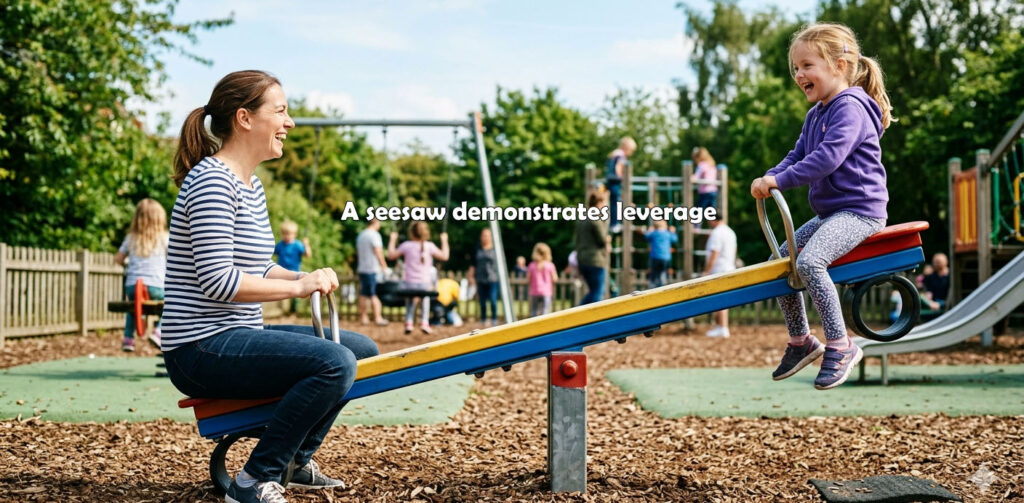
Consider a seesaw. In a fixed system, the pivot point stays in the middle, and balance depends entirely on the weights on each side. But imagine a “smart” seesaw that can adjust its pivot point or change the flexibility of the board. By shifting the pivot or altering tension, it could neutralize weight differences or even allow a single person to operate it effectively.
Relaxation functions in a similar way. It changes the entire leverage system rather than forcing you to work within a fixed one. This adaptability can disrupt the opponent’s expectations and create mechanical advantages that are not obvious.
Additionally, relaxation reduces telegraphing. When you remain relaxed, your intent is less visible. In contrast, excessive tension often signals that you are about to act, making your movements more predictable.
3 Principles of Self Defense (LRT)
L — Listen, Look
This principle is about awareness—paying attention to your surroundings using all your senses. Recognizing what is happening around you allows you to prepare and respond appropriately.
It also includes trusting and verifying your instincts. When your gut signals that something is off, use observation to confirm potential ill intent. Assess the situation: are you facing a one-on-one or one-against-many scenario? What can you see—and what might you not see? Make informed assumptions about relative strengths and weaknesses so you can plan ahead.
R — Resources
Resources include your skills, physical attributes, and available options. This covers your training in self-defense, your understanding of mechanics, and your ability to adapt to different situations and constraints.
Factors such as mobility, strength, reaction time, and speed all play a role. However, this is not just about your own capabilities—it is also about the gap between you and your opponent. The objective is to limit your opponent’s strengths while positioning yourself in areas where you have an advantage.
Planning is critical. Know your personal “red line.” Consider practical matters—for example, are you prepared to give up your phone or belongings if necessary? Be aware of environmental resources as well, such as exits, barriers, or objects that can assist your movement or positioning.
T — Target
This principle focuses on both avoiding becoming a target and understanding targets within a situation.
- Do not become a visible target.
Predators tend to observe and select individuals who appear vulnerable or isolated. This is not about restricting your rights, but about understanding the risks associated with certain behaviors. - Do not become a static target.
Remaining still makes you easier to approach and attack. Movement forces a potential attacker to expend more effort and often discourages action. - Understand intent and outcomes.
Try to identify the attacker’s objective. If the situation risks causing permanent harm to you or someone you care about, that may define your red line and you may have to act decisively. “Make him pay dearly” should be your mindset at that point. - Make decisive assessments.
Quickly evaluate your options and, if necessary, identify actions that may cause the attacker to disengage or reconsider.
SCENARIOS
Low Cross Center Thumbs-up Grip – Relax the fingers and wrist, draw your finger tips around grabber’s wrist all the way, step and reposition.
Low Cross Center Over-hand Grip – Project through fingers, keep your arms slightly bent, big step in and elbow to elbow, handover and strategically reposition.
Low Same-side Grip – Project through the fingers, elbow-to-elbow and finger-to-belly-button to regain control without escalating force; big step to reposition strategically, smile and talk to change his intent.
Fall Protection Basics
We have to protect our head and hands when we fall forward. The most vulnerable body part is the wrist. If the arms are not fast enough or strong enough, then you may smash your face onto the ground.
- Do remember the following keywords: Finger tip, finger, palm, elbow
- Do use the video on our channel to help with remembering if you struggle.
SIDE NOTES
Do remember to check our YouTube channel “SeniorsCorner-MartialGym“. It is a new channel and I need your likes, comment and subscribe to get the word out so that more people can be helped by the videos.
Nobody is using the room before our class, so I encourage you to arrive a little early. This gives you time to warm up, work with different partners to practice techniques, and develop adaptability. You can also use this time to ask me any questions.