SSD – Class notes 2025-06-12

DISCUSSION

Why self-defense or fighting arts can be a lifetime journey

Our bodies are made up of many muscles and joints. With so many possible combinations, tasks can often be accomplished in more than one way. During our session, we also observed that a person’s intent can affect how a movement is executed. Add to that the external variables—your opponent’s dimensions, body weight, speed, thoughts, knowledge, intent, and more—and it becomes clear that success isn’t about fixed formulas. What matters most are the relative factors: your strengths and weaknesses compared to this specific individual.

Additionally, your ability to adapt and respond improves over time as you face different stressful situations—much like the difference between a seasoned lawyer and a rookie. That is the reason why training with different partners is important. Experience shapes not just what you do, but how effectively and confidently you do it under pressure.

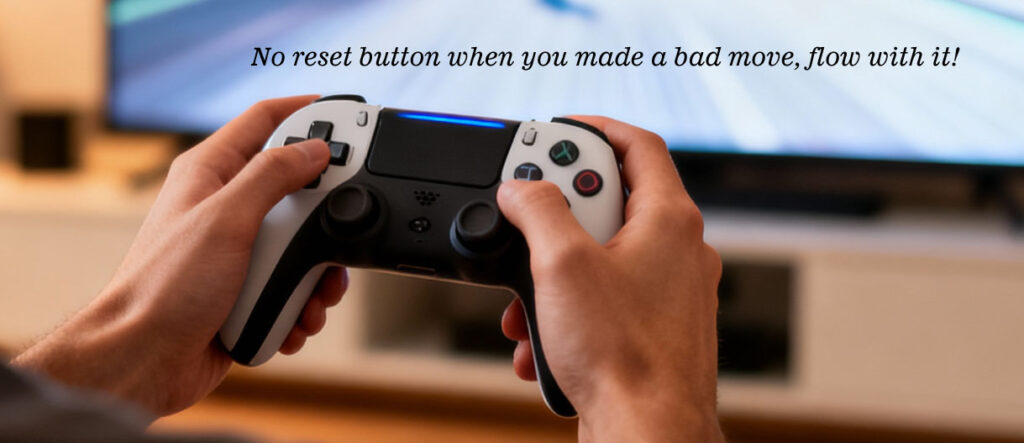
In a video game, if a move doesn’t work, you usually have more chances—and in the worst case, you can just restart the game. But in self-defense, the stakes are much higher. Sometimes, you only get one chance—and you must capitalize on it when it comes.

SCENARIOS

Two hands crossed over – low

You begin to understand why it’s so important to adapt a technique to the situation at hand. Blindly repeating a skill without considering context can actually get you into deeper trouble. In order to make effective adaptations, you must truly understand both the mechanics of the technique and the specific situation you’re facing. Only then can you choose the method that is most efficient and effective for you in that moment.

Necessity of Follow up

Despite our good intentions, there are rare moments when the aggressor simply won’t stop—and in those situations, you must inflict pain or damage to force them to cease their aggression. This is what I mean by follow-up.

When you complete a technique, you’re not pausing for a picture-perfect moment—you’re actively repositioning yourself to limit your opponent’s ability to continue the attack. If they keep resisting, you must be prepared to cause pain. This isn’t a game—it could be a matter of life and death. At that point, you cannot hesitate.

We introduced the 3/4 turn and demonstrated how it can be used as a follow-up after escaping a grip. It’s crucial to keep your opponent engaged throughout the movement. A common mistake is to reposition each body part sequentially without affecting your opponent—this gives them opportunities to recover or counter.

EXERCISES

3/4 Turn adhoc notes

  • When learning a new skill, it’s important to start by practicing on just one side.
  • I usually recommend starting with your dominant side, as it tends to make the learning process smoother. However, once you’ve learned both sides, shift your focus to the side you struggle with the most—this will help build confidence and improve overall ability.
  • Use a fixed reference point for your starting position and another for your end position. This helps avoid confusion, especially when learning turns, where it’s easy to lose track of how many degrees you’ve rotated.
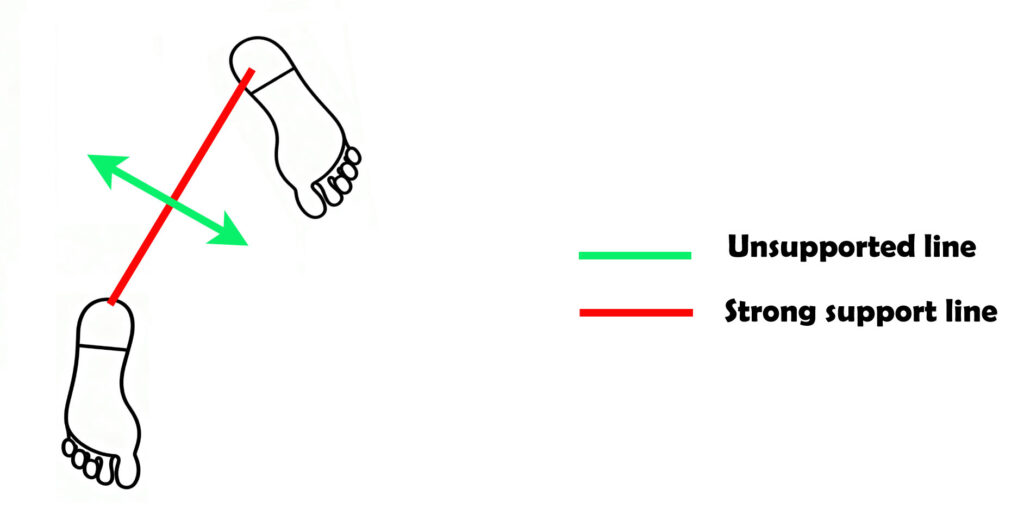
  • For the 3/4 turn, your back foot must step past the front foot from behind to complete the turn in a balanced stance.
  • Throughout the turn, maintaining your balance is essential—you should not be wobbly or unstable at any point.
  • Use a rubber band to add resistance during practice—this helps train your body not to falter when encountering real-world resistance.

SSD – Class notes 2025-06-05

DISCUSSION

There are so many pieces to each move—how can we possibly remember them all?

Who says riding a bicycle is easy? Learning it when you’re young is much easier because you’re not overwhelmed by fear. As a kid, you’re eager to learn because it looks like fun. Plus, if your friends are doing it, you want to do it too. From riding a tricycle to transitioning to a two-wheeler, then to an electric unicycle—from being pushed on a bike to finally pedaling on your own, going uphill and downhill, and even experiencing your first fall—it’s all part of the journey of learning and growing. Learning is fun and exciting.

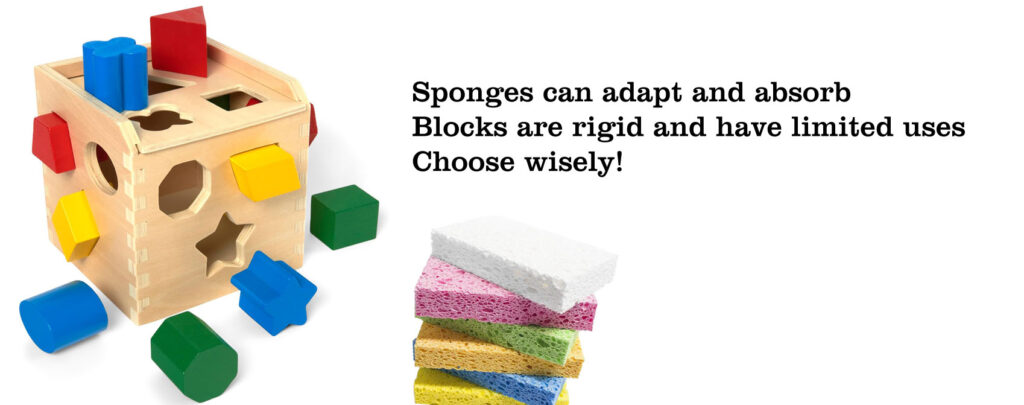
When it comes to your body, there’s no owner’s manual. There are no warranties, and absolutely no return policies. You must learn to use it in the best way possible. Many martial arts teachers present self-defense skills as absolutes—you’re supposed to trust and imitate without questioning or understanding how and why each technique works or fails. This approach does make teaching easier. However, blindly imitated skills may not be adaptable when the assumptions behind them change.

We aim to teach and explain the principles of each skill. Eventually you will see we’re applying the same core principles repeatedly. The number of principles is limited, but it takes time to learn and apply each one successfully. The good news is, once you’ve learned a principle, you can apply it again and again in many different situations. This will make it more useful in real life situations.

If I develop dementia later in life, will I lose everything I’ve learnt?

You need to invest enough time and repetition so that the movements become automatic and effortless. In a real encounter, there’s no time to think or analyze—you must react instinctively. That’s why training until a movement becomes a natural reflex is essential. When you reach that point, the skill becomes truly yours, and it will emerge automatically when needed.

Speed versus more muscles

Functional use of the muscles is essential—not only to create movement but also to maintain a standing position. However, a common mistake is shifting the focus from functional intent to simply contracting muscles. Indiscriminate muscle contraction often slows down movement.

Speed matters. The ability to deliver without telegraphing—i.e., without showing your intent through unnecessary preparation—gives you a natural head start. Reducing the distance also gives you an added advantage. We all understand that having more time to focus and prepare can generate more power. But more power is meaningless if it doesn’t arrive in time. In that case, it’s just wasted effort. The priority must be getting there first—not hitting harder.

Furthermore, if you target softer and more sensitive areas, even a relatively light strike can be more effective. For example, try slapping your palm against your thigh—it might sting a little, but it’s no big deal. However, apply that same force to your nose, and it will likely make your eyes water and cause you to flinch the next time something comes toward your face.

SCENARIOS

Two hands crossed over – low

If you think the two hands version is too complex to remember, do try the following approach:

  • reduce the level of complexity by taking away one hand and focus in on one arm.
  • so think through what you need to do if you have limited space to work with and which direction is the most vulnerable side of your opponent’s grip. Hint: It is always the direction of where the fingers are pointing. Or imagine what is being gripped is not your hand but a pole, the direction of the length of the pole should be the general direction of your counter.
  • If you attempt to move the arm in the direction you aimed at, you will find that it won’t do much because your opponent can neutralize your movement by simply moving along the same direction. To solve that. all you have to do is to use any part of your body to block him from moving with you. (e.g. use you hand to block, use his own hand to block, use any part of your body to block, reversal of direction of movement, etc.)
  • When the above step works, then find a way to create a solution that can work when both arms were gripped.

EXERCISE

Flicks

A typical whip-like motion may cause pain, but it usually lacks penetration power. For self-defense, we want our strikes to be destructive.

To achieve destructive impact, you need to generate maximum pressure. This means minimizing the contact area—so the force is concentrated. For that to happen, the strike must land perpendicularly to the surface of the target.

To make this possible, you must adjust the motion slightly so that the final few inches of the strike travel in a straight line toward the target.

A common mistake is to think that “leaning in” adds body weight to the strike and therefore causes more damage. Another myth is to tense up the muscles. Our experiments show otherwise. Staying loose and relaxed allows your body weight to flow naturally to the endpoint of the movement. Muscle tension actually disrupts this transmission—resulting in a strike powered only by muscle speed. “Leaning in” during the hit suffocates the hit instead of helping.

What we want instead is an end speed that accelerates exponentially, producing a much more explosive force. The key is relaxation, not forceful effort.

(Do review the notes from last week about how to avoid “whipping of the head”)

SSD – Class notes 2025-05-29

DISCUSSIONS

Warmups – what you need to cover?

For the purpose of self defense, warmups have two goals, either avoid injuries from falling or protect yourself from straining some muscles while trying to exert power. The other thing that you need in self defense is reflex and movement speed. Your mind and body need to be fully awake and alert.

Short Power – The ability to generate short, explosive power is of strategic importance in our system of self-defense. Since we cannot compete in terms of raw or absolute speed, we must rely on relative or smart speed. The first simplest way is to always find the shortest path possible. A large, swinging punch—like those seen in old John Wayne movies—will likely never land, whereas a short, explosive flick targeting sensitive areas of the body may be far more effective. The ability to use short, explosive power means that even if you miss, you can continue your attack or flow without needing to pull your punch back to strike again. Resetting requires covering more distance, which takes more time.

SCENARIOS

Cross-arms two handed grips – low

One way to determine which direction to escape is by looking at the direction the fingers are pointing. In this specific case, the grip—and therefore the fingers—is facing downward. Thus, the escape direction is also downward. Although this may seem like a difficult grip to break, all you need to do is use any part of your body to stop the grabbing arm from following the hand that is trying to escape. In class, two or three variations of this technique were demonstrated.

General principle of all of the escapes

Notice that there are multiple elements at work for each of the escape skills.

  • Direction of escape – Moving into the palm is usually the wrong direction. Instead, follow the opening or the direction the fingers are pointing.
  • Projection and leverage – You need to project force to create a rigid structure, allowing your arm to function like a crowbar.
  • Movement of body parts other than the part being held – Typically, you do not move the body part being gripped. Instead, you move another part of the body that has room to maneuver. This helps avoid direct, point-to-point resistance against the opponent’s force.
  • Amplification of movement through twists and bends – Twisting the wrist during the technique amplifies its effectiveness. A bent arm can also act like the “lip” of a crowbar, adding leverage without needing more space..

EXERCISES

Flicks

Sometimes I refer to it as a whip or a wave. The physics behind this movement rely on the conservation of momentum. With more weight at the end and less at the tip, this principle ensures that the tail always moves the fastest. Speed is a crucial factor when it comes to hits or impacts. A strong person can push or lift heavy objects, but it’s speed that causes pain on impact.

One common challenge is learning not to tense the muscles. Another key aspect is ensuring that the “whipping” motion propagates through the arms and hands—while also controlling the head to prevent it from being “whipped” along with the arms. The solution is to slightly tense the neck, allowing the force to travel cleanly through the arms without disrupting head control.

SSD – Class notes 2025-05-15

DISCUSSIONS

Exertion of force – Our first choice is always trying our best to navigate some else’s aggression by diverting it and using all possible effortless methods assessable at the moment. However, there are always that one in a hundred individual that don’t know when to stop and you have to apply force. Right now is just the start of a whole series of discussion related to this topic and we start with the most simple technique of a push. Common mistakes:

  • Leaning into the push thinking that adding body weight adds to the push – when you lean-in and tense up your body, you actually halved the weight of your body. The tension of the body converts the system into that of a hand-dolly.
  • Tensing up the entire body as the means to provide power.
  • Body doesn’t work together as a unit, causing leakages.
  • Directing power into the aggressor’s support leg

SCENARIOS

We went through most of the one or two handed grips. We try to match people with different partners so that they understand the need to adapt. The following questions were raised:

  • How to manage distance? Seems like when someone grab and pull, the techniques don’t seem to work.
  • What can you do if the other person turn in the same direction as you?
  • What is meant by “the power leaked away”?

How to manage distance? If the aggressor grab and then pulled and walk away, most people’s instinct is to tense up and resist. However, if you walk in the same direction matching his steps, you can maintain the same distance. Then, the techniques that you learned in stationary pose will work.

What if the other person go in the same direction as you, neutralizing the crowbar? – When you learn the technique, you are the one who is moving to get out from the grab. If the aggressor move in the same direction as you, all you have to do is to stop rotating or go the opposite direction. Remember the technique’s key requirement is that you need to change the relative angles between the arms of the aggressor and you. Of course, one of the option is for you to move. However, it will work just fine if “the mive” is initiated by him to while you stay static. Similarly, or if both move in the opposite direction, the prying effect is retained.

What is meant by “the power leaked away”? – the human body consists of many parts. Delivering power from one end of the body to another requires tight cooperation between all parts of the powertrain. Failure of any of those parts to connect properly will cause a huge lose of power. We call that “leakage” just like a leak of a pressure cooker.

EXERCISES

We identify the major muscle groups that power the stride. Furthermore, we added active action of the leading leg to help improve explosiveness to the move.

SSD – Class notes 2025-05-08

DISCUSSIONS

Practice by yourself

I’m very happy that one of you showed me how she practiced on her own at home. She stood facing the mirror, placed her hand and wrist on the ballet barre, and practiced the “crowbar method.” Here are a few things that can be improved:

  • If you are perpendicular to or directly facing the mirror, you can only turn a maximum of 90 degrees. However, if you stay close to the barre on one side, you can achieve nearly a full half-turn (180 degrees). This increased range of motion helps in applying leverage.
  • Your wrist and hand must move together with your body and steps—not before and not after. The entire side should work as a single, solid steel bar.

What Do You Gain by Reading the Class Notes?

When I teach in a live class, I don’t always have the opportunity to check whether any of you missed key points—whether due to something I accidentally left out or a moment of distraction on your part. Some ideas might even go over your head the first time you hear them.

By listening to or reading the notes, you can revisit the ideas, concepts, and key points as many times as you need—until they truly become your own.

Question: “I tried a technique on my friend, but because I did it slowly, he was able to adjust before I finished.”

The step-and-turn, when done correctly, creates enough amplification that your single movement can force your opponent to take three or four steps in response. Watch out for the following common mistakes:

  • Taking small, hesitant steps instead of one big, decisive step.
  • Separating the body turn, step, and arm twist into a sequence. These movements must be initiated and completed simultaneously—as one unified action.
  • Lacking stability. You need to practice the step and twist repeatedly to eliminate wobbling. Your whole body—from your feet to your fingertips—should be firm and controlled, but not stiff.

Notes on Speed and Use of Muscles

When a student asks me to hold her wrist so I can give feedback, I often notice the following issues:

  • She has to pause and think hard before recalling which technique to use.
  • She tends to rush through the technique, relying on muscle strength and speed.

Trying to overpower or outpace me during practice doesn’t help you learn. Realistically, I am stronger and faster than you—just as a real aggressor would be. Competing using your weaker attributes doesn’t make sense. More importantly, your current goal is to improve your technique. Excessive speed or force only makes it harder—for both you and me—to identify what needs improvement. A correct technique feels almost effortless.

The Concept of “Perpendicular”

When force is applied in a straight line at 100%, a sideways force—applied perpendicular to that line—can deflect it, shifting it off target.

This concept of the perpendicular is extremely important. To maximize impact when striking, the blow must land perpendicular to the surface of the target. Otherwise, part of the force will be deflected and the impact reduced.

The same principle applies in defense. When a strike or push comes straight at you, simply changing the angle of the surface receiving the force can significantly reduce its effect.

SCENARIOS

If You Have to Think Before You Act, You Haven’t Practiced Enough

You need to practice on your own at home. With six days between classes, even practicing just once on your own doubles your weekly training time—a 100% increase. This can help you absorb the material in half the time.

Practicing with people outside of class also introduces different body types and situations, which builds adaptability and confidence.

If you’re unable to physically practice, reading the notes and mentally visualizing each scenario can still help reduce—or even eliminate—that “let me think” hesitation.

Common Mistakes in the “Two Hands to Two Hands High Grip” Practice:

  • The sink in “relax and sink the palm” was done using muscular force. Signs of this include lifted shoulders or the feeling of actively pressing down. This might work if you’re stronger than your partner, but if you’re physically similar, you’ll get stuck. The movement should be relaxed and natural, not forced.
  • The direction of the sink was aimed toward the open center space, instead of over the forearm of the gripping hand. It should go into your partner’s structure, not just downward.
  • The step and turn should move toward the center of the opponent—not to the outside. Turning away leads to less control and leverage.

EXERCISES

Remember, you need to train not only your body but also your mind. Learning to stay relaxed under stress is very important. Take time to figure out what kind of training works best for you to develop that calm focus.

You also need to train your body to move as a single, unified whole. So the question is: how can you train that?

SSD – Class notes 2025-05-01

DISCUSSION

Mechanics

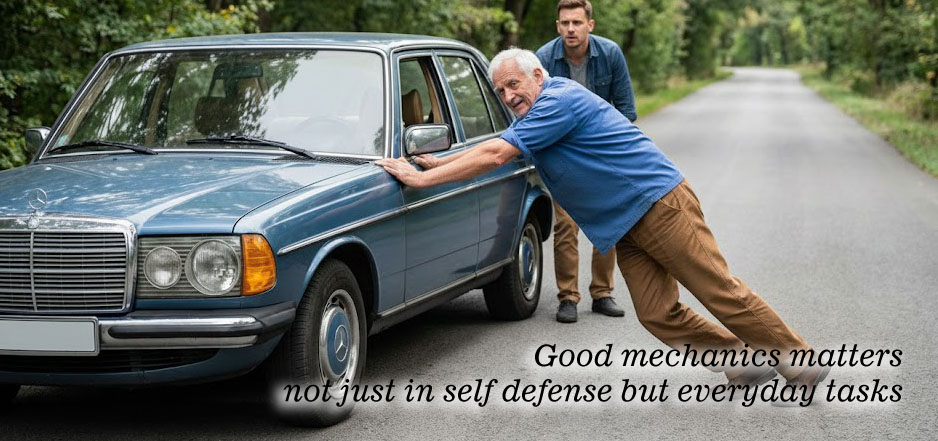
We talked a lot about mechanics, a significant part of which involves the laws of physics and the muscles being used—what we refer to as biomechanics. Applying proper biomechanics makes physical tasks easier to perform and helps prevent injuries. Similarly, using the right gears—or mechanical advantage—you can either increase your speed or amplify your workload, just like with bicycle gears.

We also explored the power of the mind. For example, we practiced projecting energy beyond the fingertips, emphasized the importance of staying calm under pressure, and discussed how practicing slowly can help reprogram your reflexes. We examined how something as simple as finger-pointing can affect the amount of power you deliver, among other concepts. We classify all of these as psychomechanics.

Reflexes

Fear creates tension, and panic can freeze your mind. Many of your habits and thought patterns were formed long ago, often during childhood. Changing something deeply embedded in the unconscious mind isn’t easy—but it is possible. The following points highlight some of the most important, though often unconventional, approaches:

Instead of tensing up and fighting with all your strength, you must relax, clear your mind, and avoid relying on strength or speed. First, become aware of the situation you’re in and consider your options or your “end game.” For example:

  • Do you have any chance of escaping?
  • Is there anyone nearby who might help?
  • Are there potential witnesses who could see what’s happening?
  • Will you need to hurt the aggressor to get out safely?
    These are just a few of the critical questions to assess.

For any technique to be effective, it must be practiced extensively—not just physically, but also through visualization. Additionally, you should test it against opponents with varying body types and under different conditions:

  • Someone with a very strong grip
  • Someone much taller or heavier
  • Someone who mirrors your movements
  • In confined spaces, and so on

This kind of preparation trains your reflexes to respond more effectively under real-world pressure.

SCENARIOS

Reinforcing the basic principles

All the different adaptations of the techniques apply the same basic concept. We have to repeat it until it is our default response.

  • Stepping and body motion must be synchronized with the arm. When the movement is disjointed, it will not work because you are telegraphing your intent and breaking the mechanics of the move.
  • While stepping away is often taught, we also discussed scenarios where staying close can be a better strategy. Staying close reduces the time and space needed to reach your opponent, allowing you to respond more quickly and maintain control. Remember key principles like “elbow to elbow”—this positioning offers better leverage and mechanical advantage than simply backing away.

Two hands grab on two wrists low

If both of your arms are grabbed, remember that you don’t need to free both hands. In many cases, freeing just one hand is enough, as the aggressor will often instinctively grip even tighter with the remaining hand—giving you an opportunity to counter. Avoid trying to yank your wrist away; this rarely works and often wastes energy.

Two hands grab on two wrists high

To escape a two-handed high grip of both wrists from your opponent, remember that the thumb is always the weakest link. Start by relaxing your palm and allowing your body weight to sink downward, directing pressure toward the opponent’s thumbs. This will begin to weaken their grip. Then, use your hand to wrap around and escape, supported by proper body angling to maximize leverage and efficiency.

EXERCISES

Practice for self defense does not always have to be physical. Training and visualizing the scenarios taught trains your neural system and is VERY IMPORTANT. Visualization plays a very important role for top athletes and so it will work for you too.

SSD – Class notes 2025-04-24

DISCUSSIONS

Relax – this is a big word especially in internal styles and is often misunderstood. In our context, we are using it as a technical term “Relax” with specific dimensions.

What it is not:

  • It is not mindless. For example, after a long day at work, you might want to lie down, grab a beer, listen to music, and let your thoughts wander aimlessly. Our “Relax” state, however, is purposeful and mindful.
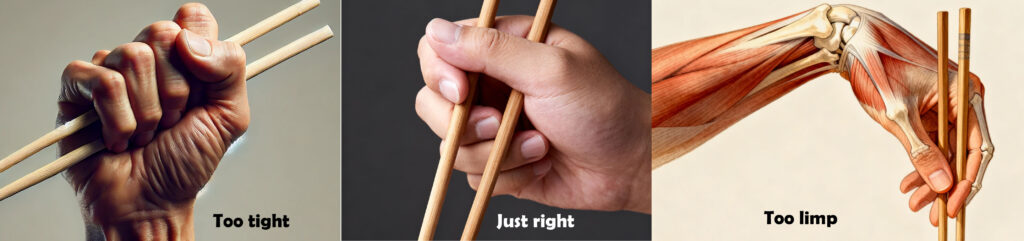
  • It is not limp like cooked spaghetti. A limp state cannot influence external entities — such as an aggressor pushing you.
  • It is not a state of having no muscle engagement. Muscles are required even to stand, lift an arm, or hold a posture. This state involves using muscles without being consciously aware of them — focusing on the movement itself, not on the specific muscle contractions that cause the movement.
  • It is not about floating your arms around mindlessly.

What it is:

  • Purposeful – there are specific things you want to accomplish with this technical “Relax”
  • Involves deep understanding of not only WHAT is intended to be accomplished but the hidden mechanics that makes the entire thing work
  • Like a boombox, as a whole, it is important to remember that the boombox is intended to re-produce accurate sound. However, each of the component knows what it has to do and work together to help accomplish the intended result – to play music. For specific skills, there are specific thoughts you have to maintain and most of the time, it is something that has to be learned because all your life, you have been taught differently.
  • Just enough – No unnecessary muscle contraction. While some muscles must be engaged, that isn’t the focus. Instead, focus might go to a point, a path, or a meaningful visualization that guides your mind into the appropriate state.
  • Discard distractions and focus – Mentally, you must fully commit to a specific idea and not let yourself get distracted. This state requires unbroken mental concentration and that is why you should not to distract a driver, or do not want to interrupt a gamer mid-game.

SCENARIOS

“The grabber moved while I was trying to get out of his grip.”

Yes, the relative position between you and your opponent is very important. We know that tools like screwdrivers and wrenches are proven and effective — but only when used correctly. If the object you’re trying to manipulate can’t be properly stabilized — for example, if it moves backward and rotates with your twist — then even the best tool won’t work.

Similarly, in dealing with an opponent, you may not be able to physically anchor them, but you can move in a way that prevents them from easily moving with you.

Some examples include:

  • Limiting the space available for their movement
  • Concealing your intended direction of motion
  • Moving so quickly that they cannot react or keep up

In essence, you control the interaction not by overpowering them, but by managing the conditions under which movement occurs.

Efficient turn around

The closer you are to the center of a circle, the less distance you need to travel — which means you can turn more quickly and efficiently. This principle explains why being near the axis of rotation increases your effectiveness.

Concepts like turning around, axis, pivot, and moving as one piece are all relevant here. These ideas are interconnected and can get a bit too detailed to be fully explain in this blog.

If you have questions or want to explore this further, feel free to come 10 minutes before class starts. I’d be happy to help you ask, validate, and refine your understanding.

EXERCISES

Visualizing, playing, and experimenting with your body to reinforce what we’ve learned in class are all essential — and they must be practiced on your own time. Every skill needs to be repeated until it becomes automatic. While many of the movements may look simple, they’re not your natural or default responses.

In moments of stress, your instinct might be to panic, stiffen up, or engage in point-to-point resistance — all of which can make things worse. You need to train yourself to respond in a more efficient and effective way.

Think of your body like a car. While having a functional car is important, having a skilled driver is even more critical. Your brain is the driver. It needs to be trained to coordinate with the car — your body — to move smoothly, take corners efficiently, anticipate other vehicles and pedestrians, and adapt to potholes and constructions to ultimately get you from point A to point B.

And just like driving, the more you practice, the easier it becomes.

SSD – Class notes 2025-04-17

DISCUSSIONS

Crowbar

If you’ve ever used a crowbar, you’ll recognize a few key principles:

  • The bar must be made of solid material—usually steel. A plastic crowbar would bend and simply won’t work.
  • The hooked or “tongue” end is designed to slide into narrow gaps for prying things open. Its bend ensures that the pivot point is at the curve, not along the middle of the bar.
  • Once the tongue is in place, you place your hands on the far end and apply force to rotate the bar around the pivot point. You’re not lifting or pushing the entire bar—you’re using leverage.

These same principles, grounded in Newton’s laws of motion, are fundamental in self-defense. Mastering this concept is essential, as many techniques rely on the mechanics of leverage and efficient force application.

Fighting with punch and kicks should be your last choice

As a senior, the person bullying or roughing you up is likely physically stronger. Competing with strength you may not have is not a smart strategy. Additionally, if you’re in a long-term care facility, regulations are in place to protect the workers—so the last thing you want is to be seen punching or kicking, as that could lead to serious consequences like being expelled from the facility.

Instead, we focus on effortless power and efficient techniques. This approach not only conserves energy but also helps ensure that others do not perceive us as aggressive.

Mental energy and effort

How you think affects how your body functions. As discussed above, the laws of physics govern nearly all movement and mechanical systems. If you are unaware of what is stationary, what is moving, and the path of that movement, you won’t be able to generate proper mechanics. As a result, you’ll only be able to tap into a small percentage of your body’s full potential.

While weightlifting primarily relies on muscle contraction to build strength, technical disciplines often go beyond simple point-to-point resistance. Instead, they make use of “projection” and “visualization” to channel energy more effectively and create more efficient movement mechanics.

SCENARIOS

Getting out of a same side, low single wrist grab

When there is space, you can simply walk toward the side of the grab and reposition yourself strategically. However, if space is limited on that side, you’ll need to rotate your elbow and come over the top, using your elbow to make contact with the grabber’s forearm. Refer back to the section on common mistakes—especially those related to using your arm like a crowbar.

Use of joint locks

Joints are designed to move within a specific range and along certain directions. If forced beyond their natural limits or in the wrong direction, dislocation may occur. Martial arts techniques often exploit this vulnerability to control an opponent. Some examples we discussed and practiced include:

  • Hand placed on the forearm
  • Hand placed on the shoulder
  • Hand placed on the chest

EXERCISES

We need strong legs. One of the exercises is an explosive long stride. Refer back to last week’s notes on common mistakes.

While it is important to do the partner exercises, it is just as important to do the exercises by yourself. Visualization trains your mind and you have to do it slow, feel through the technique, project the energy thru your body and move as a single unit..

SSD – Class notes 2025-04-10

DISCUSSION

Vulnerable spots

We experimented with our first “pressure point,” which can cause extreme pain when pressed firmly with the fingers. This point is located beneath the ear and just behind the jaw joint. While it’s nearly impossible to reach during sparring—or if the aggressor has long arms and keeps them straight—it becomes entirely accessible when a bully feels overconfident about the size difference and bends their elbows for leverage, such as when gripping someone by the collar.

Lead by the fingers or synchronization of body parts

In classic scripts, we emphasize that the limbs and hips must move together as a single unit. While many participants understand this concept in theory, they often struggle with its execution. To support learning, we sometimes need to “trick” the brain. For example, the cue “lead with the fingers” can help some individuals correct delays in hand movement.

Almost successful is not enough

Self-defense is something you use only when you’re in danger, and you may only have one chance to get it right. If you haven’t practiced the techniques, they won’t work when you need them most. Flashy movements or techniques that merely resemble the real thing aren’t effective. You need to understand the mechanics and internalize the key points. It’s like having a plastic crowbar with a tongue that’s too thick to slide into a gap—completely useless. If you’re a stuntman, almost making the jump from one building to another isn’t good enough. A safety net that’s not properly secured is unacceptable for a circus performer. In self-defense, failure can be costly—sometimes even fatal.

SCENARIOS

Being held by the collar

When an aggressor grabs you by the collar, their arms are most likely bent. If you can access pressure points within reach, you’ll likely be able to induce enough pain to break free.

Cross-arm low grip

Participants often struggle with keeping their arms anchored at the reference point during each technique and step. While the movements are easy to understand intellectually, without consistent practice, it’s difficult to execute them successfully.

EXERCISES

Ditch jumping (Long stride)

Start by bending your legs, then push off hard and fast with your back leg, fully extending it before tucking in to return to a seated position. The goal is to develop explosive power for later application.

Common mistakes:

  • Leaning the body: Your torso should remain vertical. Watch for any forward or sideways leaning.
  • Tension in the upper body or powering through the arms: This is incorrect. Eventually, the arms need to stay relaxed to perform other tasks effectively.
  • Leaning to generate power: This usually indicates the back leg lacks sufficient explosive force to power the movement cleanly, resulting in telegraphed motion.
  • Not sitting deep enough: Failing to begin from a properly bent-knee position turns the movement into a mere shift of balance rather than an explosive “launch.”
  • Lack of speed or slow acceleration: You must create a “POW” effect by driving forcefully through the back leg and glutes.

SSD – Class notes 2025-04-03

DISCUSSIONS

Rock, paper and scissors

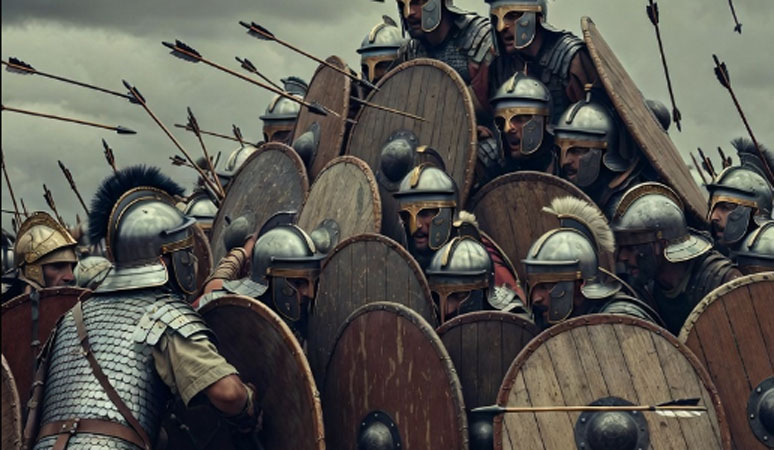
In the children’s game of rock, paper, scissors, it’s easy to explain how one hand symbol wins or loses against another. Kids quickly realize that the three symbols form a loop. From an academic standpoint, it might seem like nobody truly wins; however, in reality, there are always winners and losers in any given moment. The key point is that we must make timely decisions—we cannot expect to always make the “right” one. If we make a wrong decision, we must live with it. That’s just a fact of life.

If fighting were like this game, the outcome might seem random. However, in combat, we use strategy. One such strategy is called “tagging.” Tagging involves creating a momentary “freeze” in the opponent’s balance, focus, or commitment. We aim to exploit that freeze—a small window of opportunity—to achieve a desired outcome.

If fighting is like the game, then the outcome may be random. However, in fighting, we have strategy we call “tagging”, we use it create a “freeze” in the other person’s balance, focus, commitment, etc. and we aim to make use of that “freeze” as a window to get our desire outcome.

Use of structural power vs body weight and muscles

Using body weight and/or muscle requires commitment, readiness, and speed. In contrast, structure provides an inherent support system—it’s always there and doesn’t need to be “triggered.” This is especially important for seniors: by understanding how to use structural power, you can take speed and muscle size out of the equation and still be effective.

I don’t usually think like this..”

Yes, and that’s why one of the most important factors for success is learning not to panic, and to relax. Throughout life, we’re taught to fight and resist. For example, lifting weights involves pushing against something. But as seniors, we are often not the stronger or faster side in confrontational situations. Therefore, we must flip the entire mindset—we can’t behave as we “usually” would. This shift in thinking takes practice. We must retrain ourselves mentally to be ready.

“yes and…” versus “no but…”

How you say something changes how a person feels and reacts. Saying “yes, and…” doesn’t necessarily mean agreement or yielding—it simply acknowledges: “I heard you, and there’s more to explore.” In contrast, “No, but…” tends to imply: “You’re wrong,” and the other person may stop listening altogether. Being aware of the impact of your words and actions can help de-escalate tension and change the tone of an interaction.

SCENARIOS

Reviewing the Basic Wrist Grab Escape

We went back to the first basic move of freeing yourself from opposite arm wrist grab. With a two week break, we noticed the following common mistakes start appears:

  • fighting with arm strength – anytime you are attempting to move your opponents arm, it will trigger him to fight your movement. Therefore you must leave the “grip” point as a pivot point and avoid any lifting, sideways or downward action. Unless he knows ahead, he will not respond to a non-action.
  • confused about direction – we always attack the opponent’s weak side as first choice and we use our arm like a crowbar for leverage so that our power gets amplification since most likely, the opponent is stronger than us.
  • turning ONLY the fingers around opponent’s wrist – without the elbow or the entire arm helping with the “track the wrist” action, there is no leveraging and the technique will fail.
  • forgetting to step and turn – remember standing opposite to the aggressor reenforce the confrontation. Stepping to opponent’s direction and side helps remove you as a target and physically express the desire to see it from his side. Even more importantly, you are strategically positioned if things escalate.

Adapting to Space Constraints: When the Elbow Can’t Be Raised

We then explored a situation where space is limited and the elbow cannot be lifted—a key component in the crowbar mechanic. Since this restricts the traditional escape technique, we must adapt. Here’s the modified approach:

  • Imagine projecting energy from your belly button, streaming through your shoulders, elbows, and fingers. This projection forms an imaginary steel rod—a unified structure from your center to your fingertips.
  • Take a bold, committed step forward and rotate your body around the grip point, which must remain fixed as the pivot. By doing this, you turn your entire body into a lever, applying force from your structure against the opponent’s grip—typically just a few fingers. Stay close, move confidently, and avoid small, hesitant steps.
  • Common mistakes in this scenario:
    1. Moving the pivot point (i.e., letting the grip shift or pulling away)
    2. Taking hesitant or timid steps
    3. Failing to project structure—if the arm is limp, the “steel bar” breaks at the shoulder, elbow, or wrist, weakening the entire technique

EXERCISE

Stretching the hip

We need flexibility, mobility, and control in the connection of the hip-to-thigh (i.e. kua ) area to generate lower body structural force. One advantage of using structure is that it doesn’t require a fast reaction time—once it’s in place, it remains effective without further exertion. Another benefit is that it helps prevent overcommitting your body weight, reducing the risk of falling if resistance or support suddenly disappears. Finally, structural force involves no perceived “effort,” as bones themselves do not feel and therefore the person doing the delivery feels “effortless”.