
DISCUSSION
Pivot Point Mechanics and Leverage: When lifting a load with your arms extended straight in front of you, efficiency can be improved by bending the elbows, which shortens the lever acting against you. Once the elbows are bent, you can further optimize the movement by selecting an effective pivot point based on mechanical advantage. For example, you might use the opponent’s wrist as the pivot point and move other parts of the body around or underneath that point to gain leverage.
Power though a line: We often rely too heavily on muscle-based effort, applying weightlifting habits directly to real-life situations. This can cause us to overlook the difference between muscle-driven force and structure-driven force. For instance, pulling someone off their feet requires power, but that power does not have to come solely from muscular effort. It can also be generated by aligning your skeletal structure efficiently—positioning your body along a strong line of force—rather than relying on poorly aligned, isolated muscle exertion.
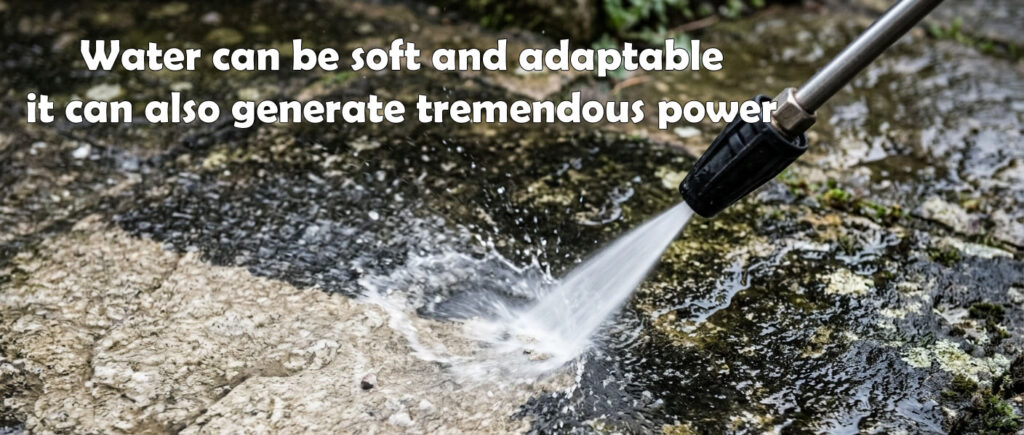
Focused power: When you narrow the “aperture” of a garden hose, the water exits with greater force due to increased pressure. If there is a leak along the hose, some of that pressure is lost before reaching the end. Similarly, while blunt force can generate power, it lacks the penetrating efficiency of a more focused output. The human body operates in a comparable way: if there are “leaks” in your structure—misalignments or breaks in force transmission—your overall power output is significantly reduced.
Application of what you have learnt: The more you apply these concepts in daily life, the more confidence you build through direct experience. For those who have trained for decades, even without engaging in physical conflict, the benefits are substantial. These include improved fitness and health, greater strength and adaptability compared to peers, and the ability to apply general principles and philosophy to help others.
SCENARIOS
Review of wrist escapes
Aside from the Low grabs, we reviewed the high wrist grabs and corrected some of the most common mistakes. Then we reviewed how to handle the various high wrist grabs:
- High across wrist grab
- High same side wrist grab
- Low across over-hand grab
If you cannot remember, of course you can ask in the next class. However, do try to apply the logic or mechanics from techniques you have already learned and see if you can derive a workable solution.
Experimented with the pull mechanics
When I say “relax” while pulling, I do not mean becoming loose or weak. I mean avoiding unnecessary tension that creates internal resistance and works against your own leverage.
You should visualize a continuous “power line” running through your body. In this case, it extends from your feet to the tip of the opposite shoulder. Any part of the body that is not aligned with this line should move toward it. Likewise, any body part contributing force should stay as close to this power line as possible to maximize efficiency and minimize energy loss.
EXERCISES
Repeat previous week’s exercises.
SIDE NOTES