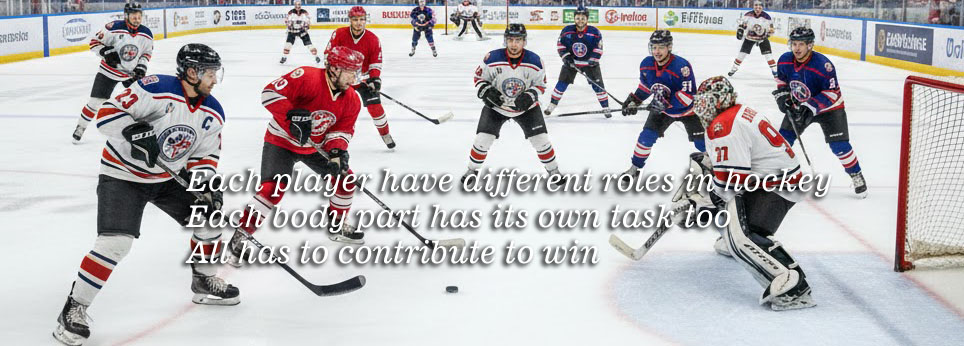
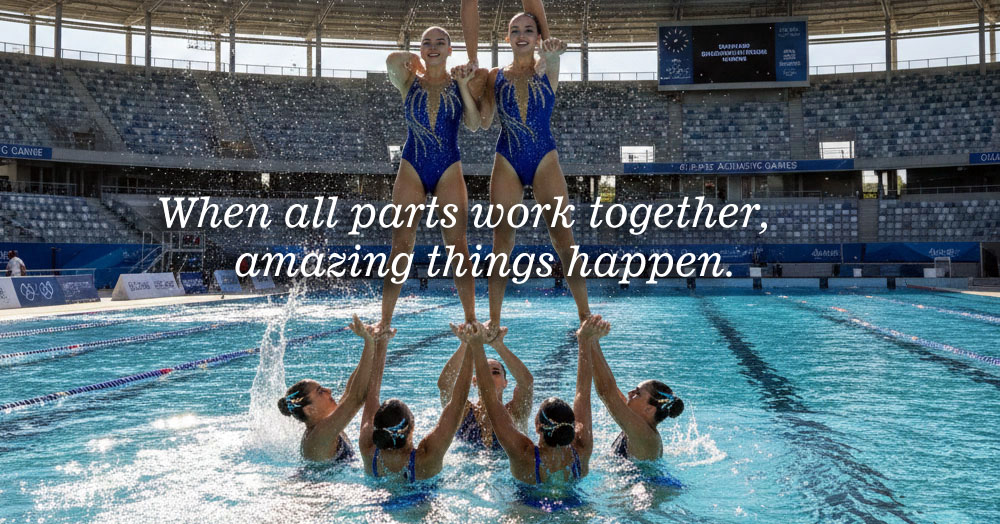
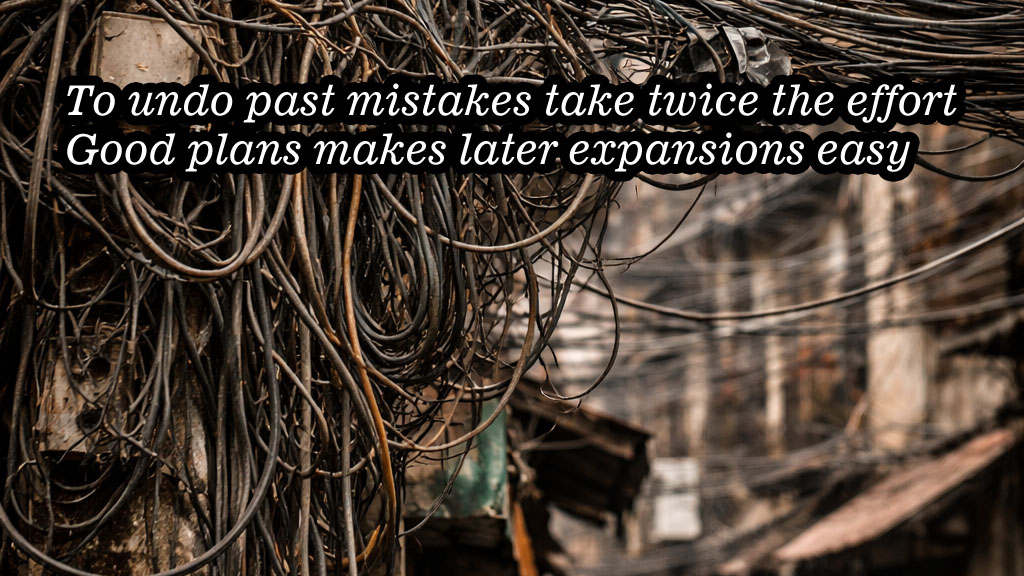
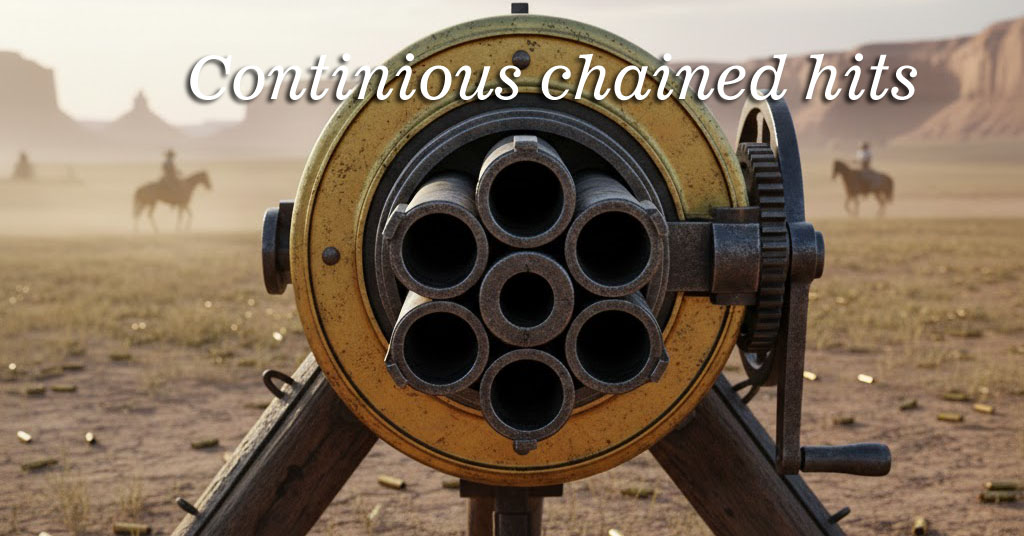
Relaxation is a crucial and often counterintuitive principle. Excessive tension restricts movement and telegraphs intent, whereas relaxation allows you to move fluidly, exploit openings, detect weaknesses in grips, and act without prematurely triggering defensive reactions. It also enhances range of motion, efficiency, and unpredictability.
Principle of Perpendicular Impact:
Maximize striking effectiveness by delivering force perpendicular to the target surface. Glancing blows dissipate energy, whereas perpendicular strikes transfer force more efficiently. Adjust your angle according to the target’s orientation for both hand strikes and kicks.
Need to be fast
Speed doesn’t always have to be raw speed. The slowest component of the entire response chain are:
Decision-making takes time. Most people need several minutes just to choose what to order from a menu; in a dynamic situation, that delay is a liability.
Memory recall can also be too slow. Effective responses should be nearly automatic, which only comes from consistent and deliberate repetition.
Another bottleneck occurs when body parts “wait” for one another instead of moving within the same time frame. This reflects a need for better coordination, clear understanding of the mechanics, and, again, extensive repetition.
SCENARIOS
Random grabs within 5 different grabs with follow through strikes
The 5 different grabs in focus are:
Handshake-style low grab across the center line
Palm-down low grab across the center line
Same-side low grab
High grab across the center line
High same-side grab
Within these five, it was observed that some escape variations appear identical. When generalized, they can be grouped into three distinct methods:
Trace the fingertip over the wrist
Pry open using the forearm
Point to the forearm and wipe the thumb
Common mistakes on the linkage into the “follow-through strikes” portion of the skill:
Hesitation in pulling direction: When pulling the arm, draw it across your body so you move toward the attacker’s backside rather than staying directly in front.
Neglecting the spare hand: The free hand is often forgotten. As soon as you initiate movement, the free hand should engage simultaneously with the step and arm action.
Pulling with the hands only: Relying solely on the arms reduces effectiveness. Instead, integrate stepping, body alignment, and whole-body movement to control and pull more efficiently.
EXERCISES
Continue with all the physical conditioning as well as solo strike practices
ANNOUCEMENTS
Registration for the Spring session begins on March 2, 2026 in Burnaby. I hope all of you will register again if you enjoyed the current session. Sixty years of training cannot be condensed into 10+ classes — what you have learned so far is only the beginning.
I also strongly recommend that everyone take Martial Gym – Functional Fitness if they have not already done so.
There is a FF class offered at Christine Sinclair Community Centre from 11:00 a.m. to 12:00 noon, following the Self-Defense class at Bonsor. I consider it a foundational layer for self-defense as well as for other physical activities. It also teaches you how to fall with minimal injury.
Human only have two hands and that is assumed to be a fact. We often wish we have an extra pair of hands. We say pick pockets have a 3rd hand. For us, as trained martial artist, we learn and train to have more than two hands: two elbows, two shoulders, two armpit, one chest, etc. With the extra hands, you gain your ability to control your opponent and can use the extras to hit from unexpected angles.
Staying-in close
When we face an aggressor, it is most important not to allow him to be up close because it will not allow for us to respond fast enough to any sudden attacks.
When we really have to fight after all defusing methods failed, we have to be either “out or in”. We cannot stay at a range where the aggressor have all his tools assessable (i.e. punches, kicks or whatever). Once we are in, we cannot afford to stay waiting for the attacks, we have to take the initiative and overwhelm him. You need to be determined and decisive. Do not hesitate or stay static.
Integrated Body Movement & Leverage
This core principle emphasizes using the entire body—unifying the core, hips, and limbs—for every action, rather than relying on isolated muscle strength. This generates superior force, maximizes leverage, and provides a significant advantage over an untrained aggressor. Actions should be fluid, linked, and powered by body rotation and weight transfer.
Blocking and countering
The following key points must be remembered:
Our blocking technique is inherently offensive. Always block towards your opponent and NOT to the side
Using the hand that is already out help shorten the distance to the target
All defensive motion must AFFECT your opponent. At a minimum, get them to reset their distance or target.
SCENARIOS
Follow up from counter grips
This week, instead of simply staying in strategic positions after getting out of a wrist grab, we learn how to follow up using the attacks that we have learnt.
The technique we experimented with seems very complicated when you are first introduced to it. There are lots of moving parts that has to be happening simultaneously. Once we get an idea of the desired movement pattern, you need to practice repeatedly just “a single beat” (meaning identify all the things that has to move within the same timeframe) and practice until you can repeat without even thinking must about it. Then you move onto all the required movement within “the second beat” (everything that has to move simultaneously within the same frame of time). Segmenting a move into timeframes or beats help drill the idea of “all together” into your movement pattern.
For every move, you have to understand what are the key components to generate power, which part of the body is generating the power,
Some of the key points to remember:
An overhand grip is when the opponent’s hand is over yours, making it hard to reach over them.
The escape involves pressing into the opponent’s thumb and rounding your arm out.
Immediately after escaping, transition into one arm slide up while the other hand retain and control.
If further escalation is required, turn your body and do a cross into the face and nose follow up by another 90 degree turn and strike.
Use your whole body to turn and generate power for the punch, which provides longer reach.
EXERCISES
Try to recall the skills learnt and attempt to reproduce it smoothly by visualizing the movements required to make it work. Remember that
Improve physical attributes like endurance, power and speed on techniques that you are confident you are doing correctly. For new techniques, work on accuracy and fluidity first before adding power.
Intellectually understanding something is very different from being able to do it instinctively. Most people, when they hear the word “strike,” reflexively tense up. Do not add power until you know you are doing the movement correctly, or you will build habits that are very difficult to change later.
Some of the key challenges for beginners include:
Unnecessary tension in the shoulders
Elbows flaring outward instead of staying relaxed and down
Keeping the body tight instead of “relaxing into” one’s own structure and center
Overuse of stabilizing muscles, causing one muscle group to fight against another
Failing to slightly tuck the chin, which opens the throat to strikes
Strikes moving side by side instead of hand over hand
Strikes traveling too flat or downward, rather than slightly upward so that action–reaction helps anchor you instead of lifting you
Leaning to generate power, which adds little benefit and increases exposure; staying centered is more effective and safer
Forgetting to reestablish guard after striking
Underuse of the legs and whole-body connection
Train the brain first
We have demonstrated how important it is to change reflexive responses when working on escaping wrist grabs. Many people automatically tense up, even when practicing with a cooperative partner. We have shown and discussed how tension alters mechanics, and how using tension in the wrong places actually causes you to work against yourself.
Your brain can only process a limited number of commands at one time, especially when learning something new. Relaxing and slowing down gives your brain the time it needs to send the correct signals and allows you to self-assess what you are doing. Blindly adding muscle does not speed up learning; more often, it programs incorrect neural pathways. Once those patterns become habits, not only was the training time wasted, but correcting them later requires more than twice the effort.
Importance of the lines
Straight line – during the strikes, we want the line to be straight where possible so that we arrive fast via the shortest path
Circular line – sometimes you have to take a semi-circular route to have better control or sometimes to simply move out of the way. For example, the windshield wipers move in semi-circle to cover a big area with a single stroke.
Structural line – the line of support is often referred to as structural line. For example, for a person standing up, the structural line is vertical thru the upright axis.
Point weapon to target line – as a concept, the weapon can be anything anything from your fist to possibly a knife or a gun. Police are taught not to point their gun to anyone unless absolutely necessary to avoid accidental misfire. However, when you are in the midst of a combat, you should point to the potential target.
SCENARIOS
Pressuring your opponent backwards
We are attacking the opponent’s weak structural line so that they have no option but to step back and rebalance. This pressure must be continuous; you should not pause or “wait and see” between steps. Through your controlling arms, you should be able to feel where the opponent is structurally strong and where they are weak, and adjust your pressure accordingly.
Use of elbow
The elbow has the disadvantage of limited reach; you must be very close to your opponent to make contact with the target. However, it has the advantage of being extremely strong and effective. The tip of the elbow concentrates force into a very small area, which means the impact can generate significant pressure and cause serious damage.
We begin with the right elbow and learn three strikes: across from right to center, top down, and bottom up. As before, apply the same learning process—start from the guard, slide in, and experiment with different leading legs. Use your hips to generate rotation, and perform the movements slowly and loosely. Focus on experiencing the motion rather than forcing power. We will go into greater detail next week.
EXERCISES
Repeat exercises from last week for body conditioning.
Stretch and move your shoulder to get your body ready to learn elbows without hurting yourself.
A 500lb punch must land on a viable target before it has any effect.
In martial arts, participants are always taught that physical techniques should be a last resort, used only when talking, warning, and all other attempts to slow or stop the aggressor have failed.
As seniors, we must assume that we are neither stronger nor faster than an aggressor. There are many reasons a confrontation can occur, but an imminent threat to life is one of the most serious. If there is a possibility of more than one assailant, there may be no choice but to act quickly and use whatever “tricks” are available. It is inherently unfair to be attacked in the first place, and in such situations, the outcome can truly be a matter of life and death.
Increasing Reach and Power
One could argue that the legs are longer and stronger than the arms and therefore offer greater reach and striking power. While this is true, for most seniors, kicking can be dangerous. For some, even on their best day, standing on one leg is already a challenge. As a result, while I do work with them to improve balance and strength, they are often not yet ready to rely on kicks as a primary weapon.
When it comes to punches, many seniors have additional limitations. Some have experienced falls and have wrists that never fully healed; others suffer from arthritis, leaving their hands and wrists in poor condition. For these individuals, punching with a closed fist is not an ideal option. Instead, I favor palm strikes to the nose. This causes the aggressor’s head to tilt back, which naturally exposes the throat. When the distance closes further, the elbow can and should be used as necessary.
Lack of striking power is a serious issue, because once you commit to an attack, you are within reach and fully engaged. A strike that feels more like a touch than an impact encourages the aggressor to trade blows—or to respond with even greater force.
Maximizing your body structure for the hit
If you rely only on the strength of your arms, you are drawing from a limited resource. Chances are your opponent is stronger, which may be why he chose you as a target. To amplify your hitting power, you need to consider the following points:
Maintain sufficient reach to penetrate the target and allow force to pass through it.
Relax your shoulders and back so the angles are smoother and your structure is supported by your entire body rather than isolated muscle tension.
Relax and put your whole body behind the strike, instead of tensing up and emphasizing only arm strength.
Do not try to time your hands to your foot movement. Treat everything below the belly button as the “bus” you are riding. Your upper body should be able to move independently of it.
Keep your elbow relaxed and loosely aligned with the centerline to reduce torque acting against you.
Practice slowly and in a relaxed manner to make habit changes easier. Increase speed gradually once you are confident the mechanics are correct.
SCENARIOS
Chained hands attack
The following are the keypoints:
The following are the key points:
Relax the shoulders downward and allow the chest to rotate around the centerline to maximize reach.
Aim for the nose. During solo training, visualize an opponent of your height. A point roughly four inches above your shoulder level is a reasonable approximation of nose height.
Coordinate the retreating arm with the attacking hand. The hand that has just completed the strike should press downward to create space for the opposite hand to extend immediately. Do not pull the hand back past the ribs. Keep the elbows resting close to the ribs to maintain protection.
Once you move off the line, continue with short, controlled stutter steps to follow up and strike while maintaining balance and positioning.
Pulling back while grabbing or destabilizing can either turn the strike into a heavy, “collision-level” impact or knock the aggressor off balance, reducing their ability to counterattack.
Maintain mental commitment and decisiveness. Your focus should be on stopping the threat and acting with clarity, rather than hesitating or becoming distracted by fear of retaliation.
EXERCISES
Practice the strikes taught in class and develop them one step at a time. Begin from a stationary position with the arms relaxed. After each strike, pause to check your guard, shoulder and chest position, centerline alignment, strike height, and coordination between the striking hand and the controlling hand.
Next, work on the following strike using the same process until individual strikes are mostly correct. Then begin chaining strikes in pairs, again stopping after every two to reassess structure and positioning. Learn to feel the movement and develop the ability to self-assess.
Once this foundation is solid, gradually introduce stepping and continuous strikes, increasing complexity only as control and correctness are maintained.
In addition, train your body strength and cardiovascular endurance as described in the previous class.
A pivot does not move. If a pivot moves at the same speed as the rest of the line, the action becomes a simple direct push rather than a push with mechanical advantage. A common example is the center point of a seesaw, which remains stationary while force is applied on either side.
The farther away from the pivot a force is applied, the greater the mechanical advantage generated.
If an opponent manages to rest a hand on your shoulder, they have effectively established the pivot of their mechanical system. In this situation, blocking at the elbow will be ineffective because the resistance at the shoulder is positioned farther back, giving it superior mechanical efficiency.
Generating Force Through Projection and Structure
Projection and visualization are functions of the mind in additional to the physical body. For example, you may move your body into a specific shape and reinforce the shape via the mind, you can also anchor certain parts of your body as pivots even though there are no physical bolts to keep you there, or you can put your arms as a circle and imagine your arms and the body form an expanding sphere. These mental constructs are tools that influence physical structure.
All of these methods rely on a single underlying principle: using intention and mental framing to alter the mechanical system in a way that shifts advantage in your favor.
Power of the Bent Rebar
A straight piece of rebar can be bent with relative ease. However, once it is bent, it becomes extremely difficult to pry back into a straight line.
This phenomenon explains why we do not keep our arms fully straight when punching or pushing. Instead, we maintain a slight bend so that the elbow joint does not become a structural weak point. The same principle is applied in certain anti-grip techniques, where a bent structure makes the “crowbar” effect feel significantly stronger and more resistant to leverage.
SCENARIOS
Many people push by relying primarily on their upper body while leaning into the target. This approach usually requires you to be physically stronger than the person receiving the force, which is inefficient and unreliable. The following principles address this problem:
Do not lean into your target. Leaning forward makes you vulnerable if your opponent suddenly moves away, causing you to lose balance and structure.
Do not apply force in a simple straight line, as explained during class. Instead, adopt pendulum mechanics whenever possible to redirect force and improve mechanical efficiency.
During a push, the arms should travel only minimally. The true engine of the push comes from the whole body, not from the arm muscles alone. While the arms must maintain structure, they should not be limp, nor should the entire body and arms become stiff.
You cannot take a preparatory step before pushing, as this signals your intention to your opponent and gives them time to resist or evade. Engagement must occur at the moment the intention to push arises—you must affect your opponent immediately, without telegraphing.
EXERCISES
Plank
The standard plank is widely regarded as one of the most effective exercises for engaging multiple muscle groups. Our approach is similar, but with a slightly different emphasis.
The focus here is on developing the ability to relax muscles that are not directly involved in maintaining the structure of the plank. You should learn how to “lock” your joints appropriately so that the correct shape is preserved with minimal muscular effort.
The goal is to experience what it means to use only the minimum set of muscles required to hold the plank. This skill—efficient structural engagement rather than brute muscular tension—will prove extremely useful later in your training.
Squat
Recent research indicates that seniors with strong leg muscles tend to live longer and maintain independence for a greater period of time. The squat is a fundamental exercise for developing leg strength.
In our training, we perform the squat as an isometric (static) exercise to avoid aggravating knee conditions, which are common among seniors. We do not prescribe a standard number of repetitions or a fixed hold time. Instead, our criterion is simple: hold the squat until your muscles begin to burn and your legs start to shake, then maintain the position for an additional slow eight-count while actively working to preserve proper structure.
This approach strengthens not only the body, but also mental resilience and focus.
Football
Stay in a squat position while you stomp on the ball of your foot alternating between left and right as quickly as you can to build leg strength, endurance as well as work your cardio. If you do the squat right (or vice versa) after this exercise, you find that your legs start burning very quickly.
“Blitz” — a sudden, overwhelming, and intensive attack or campaign.
Most people will feel overwhelmed by a sudden, intensive attack, no matter how simple it appears. This natural reaction can be used to your advantage in counteraction. Rather than relying on a single punch at a time, overwhelming pressure—such as a rapid series of actions—can disrupt an opponent’s ability to respond effectively.
Body language is important
When someone approaches aggressively, the instinctive response is often to back away in order to maintain a “safe” or comfortable distance. However, this movement is frequently interpreted as submissive or fearful. Ironically, such defensive behavior can have the opposite effect—it may encourage the aggressor to continue or escalate.
You must avoid falling into this trap. Instead of retreating straight backward, move laterally. Sideways movement forces the aggressor to adjust their direction of travel. This adjustment may seem subtle, but it is significant in terms of fight mentality: the aggressor must momentarily “reset,” and the dynamic shifts from you being led to you asserting a degree of control.
Arm Position Is Important
Raising your arms to create a “barrier” between yourself and the aggressor should not appear threatening. Instead, make it part of a natural, non-confrontational gesture that supports verbal communication, such as:
“I’m sorry if I upset you, but could you stay where you are? I’m not comfortable with people coming too close. We can talk.”
Do NOT assume a stance that resembles a fighting posture, as this will likely be interpreted as a challenge and will almost certainly trigger a physical confrontation. At the same time, avoid folding your arms tightly inward against your body, which can project fear or submission. Your hands should remain open, relaxed, and loosely oriented toward the aggressor’s arms in front of you.
Distance Is Important
If you are too close and do not intend to initiate a confrontation, you cannot afford to react after a punch has already been thrown. An overly aggressive individual is often faster and stronger. By the time your brain registers the attack and attempts to respond, it is usually too late—the first strike has likely already landed.
Maintain a distance that keeps you just outside the range of kicks and sudden forward charges, such as a football-style tackle.
Because you do not want to retreat straight backward, your practical option is to move in a circular pattern, keeping the aggressor near the center while adjusting based on their speed. Ensure your movement does not unnecessarily expose you. Continue to “peel off” laterally while talking, rather than planting yourself in place.
Voice Control and Explicit Directions
Voice Control – Assertive, Not Aggressive
Speak calmly but assertively, clearly stating the action you want the other person to take, such as:
“Please stay where you are and don’t come any closer.”
If this direction is ignored, you must escalate appropriately by increasing the volume and firmness of your voice—without insults or name-calling—into a clear command:
“STOP. RIGHT THERE.”
A sudden change in tone and volume can startle the aggressor and may interrupt their forward momentum, creating an opportunity to de-escalate and seek resolution.
Do not stop moving while this is happening. A small step forward from an aggressive individual may be an attack, and you must remain prepared.
As you continue to move and verbally de-escalate, a raised and commanding voice may also attract attention from bystanders. This helps establish, through both words and body language, who the aggressor is—potentially discouraging further escalation.
LRT Principles (Listen–Resources–Target)
A core framework emphasizing:
Listen: Active sensory intake and interpretation—eyes, ears, and physical awareness.
Resources: Strategic use of time, space, positioning, and environmental factors. Accumulate strategic resources even during time of peace.
Target: Actively managing movement—both your own body and the opponent’s focus—to reduce risk and gain advantage.
SCENARIOS
Oncoming threats and shortening of distance
During the partner drills, you discovered that intellectually knowing what to do is very different from being able to respond correctly when someone suddenly comes directly into your space. When a threat closes distance quickly, the body often freezes instinctively before the mind can catch up with the preferred approach.
This is why practice is essential. You must train until you are able to move laterally instinctively while speaking naturally, maintaining awareness and control rather than freezing or retreating straight backward.
Single arm push with driving steps
In this partner drill, you observed that maintaining forward pressure while in contact requires practice. Driving forward while stepping must be supported by the correct level of tension in the lower body, particularly in the hamstrings and calves.
At the same time, the upper body must remain loose and mobile. Excess tension in the shoulders or arms reduces efficiency and limits adaptability.
Handshake review
Further experimentation was conducted on how to practice this concept independently. A chopstick was used as a simple training aid to simulate contact and reinforce proper structure, pressure, and awareness.
EXERCISES
Planks with tucks and extensions
We begin with basic planks. For your first set, perform the standard (vanilla) version. Once you start to feel the burn and your body begins to shake, hold the position for an additional 8 counts.
Next, move to the advanced variation. From the plank position, actively drag your feet forward using upper body and abs. Then reverse the motion by extending your body and pushing your feet backward. Alternate between these two directions. The body should not be sagging during any of these.
Continue moving back and forth until you begin to feel unstable or shaky, then hold the position again for 8 counts. All movements must be slow, controlled, and deliberate. At the peak of each direction, pause and hold for approximately 2–3 breaths before reversing.
Repeat the various movement steps from last week.
You can treat this portion as a form of cardio training. Efficient and unpredictable movement is fundamental to any self-defense method. There is no single “best” technique, as situations vary widely.
What truly matters is the ability to move fluidly in multiple directions and adapt to changing circumstances. Developing this capacity requires consistent practice.
Isometric Push Against the Wall
The body consists of many interconnected and moving parts. Being able to summon and coordinate all the necessary components instantly takes practice. More importantly, effectiveness and efficiency are not achieved through muscle tension alone.
You must learn to engage only what is necessary while relaxing body parts that do not contribute to the action. This selective activation conserves energy and improves overall performance.
Quick reminder / introduction of a few key concepts
The following are 3 of the key elements needed in almost all of the skills –
Project – This changes the state of your arm so that energy flows outward as a continuous stream, rather than being generated by isolated muscle engagement in individual body parts.
Pivot – The pivot is the point that does not move. It is usually the point of contact—for example, where your wrist is being held. Leverage system requires a fixed pivot.
Move as one piece – When you move, you must engage your opponent instantly. Stepping without affecting your opponent effectively advertises your intent to resist.
Guiding vs Pulling Analogy
One of the clearest ways to illustrate our power systems is through the example of tugboats.
Large cruise ships cannot maneuver easily in tight spaces, so they often rely on one or more tugboats for assistance. These tugboats guide the larger ship rather than attempting to push it using brute force alone.
The large ship and the tugboat are connected by a chain, not a rigid steel bar. The chain allows the angle of connection to change freely without creating unnecessary torque.
Anyone who has driven an older car without power steering knows how difficult it is to steer when the car is completely stopped. Steering becomes much easier when the car is moving—even very slowly—while turning the wheel.
Common errors
Stiffening the arms creates a leverage system that your opponent can exploit. Your arms must remain relaxed and adaptable, while your focus stays on the target.
Instead of leading and steering with the hands and fingers, many people rely on muscular force to push through. This undermines control and efficiency.
SCENARIOS
Handshake
Escape a handshake squeeze by controlling specific joints:
Relax your fingers while minimizing movement in the aggressor’s hand. Secure control of the thumb and rotate it in the direction it is not designed to move.
Apply downward pressure combined with rotational force at the joint.
Practice this slowly and step by step. For example, develop a basic understanding of how the finger joints function. Instead of using a finger initially, you may use a pen or a chopstick to learn the twisting action safely and clearly.
Next, practice extending your arm while maintaining downward pressure and applying the twisting motion. After that, incorporate a step-around. Train each component separately, even when practicing alone, before combining them.
Tripping over uneven pavement, tree roots, stairs, etc.
Tripping over a seemingly flat surface is one of the major hazards for people of all ages. Younger individuals often recover quickly, but for seniors, a fall can have lasting consequences. This exercise is designed to improve your chances of avoiding or recovering from a trip.
Lean forward into a long step, placing most of your weight on the front foot, while keeping the back leg relatively straight.
Without rebalancing or shifting your weight backward, attempt to free the front leg by briefly yanking it upward into the air, then landing back on the same leg.
Progress from a straight upward yank to an “unhooking” action, allowing the foot to land slightly in front of its original position.
EXERCISES
During the previous season, we experimented with gallop steps and stutter steps. Each addresses different needs and answers different movement questions. This season, we will begin with the sliding step.
Before proceeding, it is important to understand that most people naturally move using a two-beat step. In the first beat, the distance between the legs increases; in the second beat, the trailing foot is brought in to return to a neutral stance. In a combat context, a two-beat step takes too long. It is far more efficient to accomplish the same movement in a single beat.
The sliding step achieves this by allowing both feet to travel in the same direction at the same time.
Required Variations to practice
Sideways travel to both the left and the right, using different leading feet
Leading foot switches from a stationary position
Leading foot switches while traveling left or right
Create variations of each of the above by changing between high and low levels
Intermix the sliding step with all other stepping methods
Common challenges
If you have hip issues, proceed cautiously. Experiment to see whether leading with one side feels more comfortable or stable than the other. Also explore different stance heights to find what works best for your body.
Ensure that the workload is shared across multiple muscle groups, including the abdominals, glutes, and inner thighs, in addition to the quadriceps and feet.
Be aware that if the step includes a phase where the legs widen before coming back together, it has reverted to a two-beat step.
Focus on sliding. Minimize or eliminate bouncing to reduce impact and unnecessary stress on the knees.
SIDE NOTES
You must put in consistent effort to achieve meaningful and rapid improvement. The following are my expectations of every participant:
Review class notes You are expected to read the class notes every week to ensure nothing has been forgotten. They are usually available by Sunday evening. Do use the time before class to ask questions before class begins.
Arrive early Although the official start time is 9:00 AM, the room is available beforehand, and I typically arrive at 8:45 AM. This 15 minutes can be used to warm up, ask questions, socialize, and practice with different partners.
Practice outside class time Practicing only during class is not sufficient. Physical training is essential for sure, mental training is equally important. Thinking and reviewing class notes is a form of mental practice and reinforces what you learn on the floor. All the skills must become reflexes.
Read all the notes from previous seasons I strongly encourage everyone to review class notes from sessions other than the current one. This helps you understand the larger framework of the system. If you encounter anything you do not fully understand, ask questions. Do not be shy.