SSD – Class notes 2025-12-18

DISCUSSION

Amplifying the slap

Breathing / movement of ribs to absorb

The rib cage can be moved with breathing but it can also stay relatively static. The movement is almost like a folding action downward as can be seen via the animation below. This phenomenon can actually be applied in martial art skills. The amplitude of this movement can be increased over time through practice.

Pain conditioning

If you think about a chess game, you will lose some pieces even if you win at the end. This is the same in another other sports like tennis, basketball, etc. In fighting, each of the point that was lost represents a hit that landed and therefore will cause pain. Do be ready for it. If you are in shock because of a single contact, you are guaranteed to run into problems: everything you learned will be out the window.

Some body parts that everyone that do martial arts train pain tolerance:

  • knuckles, palm and elbow for attacks
  • shin and thighs for defense
  • forearm and upper arm mostly for defensive moves
  • tummy to be able to take some hits

SCENARIOS

High grab on slightly higher than wrist

The last time, we were doing this scenario but with the grip below the wrist. However, one of the pairs have trouble making it work when the grip is partly on the hand itself and not on the wrist.

To get out, instead of bend the wrist down, wrap your thumb around your opponent’s thumb. This is cause his thumb to lose its support / anchor and roll inward. That will loosen his support and therefore give you the opportunity to press and get away.

EXERCISES

Keep yourself fit over the holidays!

MISCELLANEOUS

Do you understand the differences between the following:

Martial Arts — A broad, generic term that encompasses all fighting styles.

Kung Fu (or Gung Fu) — A term for martial arts that originated in China and that still retain many traditional training methods and core principles.

Mixed Martial Arts (MMA) — Many people assume that UFC and MMA are the same, but they are not. UFC is a specific promotional franchise for MMA competition. There are many others, such as ONE Championship, Cage Warriors, and more.

Karate, Aikido, Judo — Japanese martial arts styles. Although their historical roots can be traced back to China, they developed distinct emphases, structures, and training methodologies that are clearly Japanese.

Internal Styles of Kung Fu — The term “internal” refers to an emphasis on elements that are not easily visible, such as alignment, timing, and coordination. Many people doubt their practicality in real-life situations. However, if you are fortunate enough to learn from a good teacher, you will find that many of the principles and training methods make complete sense. Well-known examples include Taiji (Tai Chi), Bagua, Xingyi, and Liuhebafa.

External Styles of Kung Fu — The term “external” generally refers to styles that emphasize muscular power, speed, and physical expression, often resulting in movements that are visually impressive.

Why do I like martial arts so much?

My uncles were involved in a style called Wing Tsun (永春). My grandfather dabbled in Tai Chi. Whenever I visited him, his way of “bonding” with me was often, “XXX (my nickname), come and push me—you can’t move me.” My mother would sometimes read martial arts novels (武俠小說) to me as bedtime stories. A couple of translated Japanese television series about judo training (柔道龍虎榜, 柔道小金剛) from the late 1960s and early 1970s further fueled my intense interest.

Because my teachers came from different backgrounds and styles, it was challenging to reconcile their differences. I often wondered whether anything I was being taught was wrong. At that time, the primary method of learning was imitation—copying the teacher—so the emphasis was on how to do something, with little explanation of why it was done that way or what problem it was meant to solve. As a result, learning kung fu felt very much like solving a puzzle. You were given hints and clues through old Chinese poems passed down from generation to generation.

Later, during high school and university, I began to find some of those answers through my studies in physics, psychology, sports science, anatomy, and related fields.

I have always considered Liuhebafa to be my “home” style. My experience with other martial arts enriched my understanding and provided inspiration and alternative approaches to the art of fighting. During high school, protective equipment was still quite expensive, so my friends and I sparred bare-knuckled. I accumulated plenty of bruises to my body and legs, and I nearly lost a tooth once.

Those experiences are what keep me grounded. I want to ensure that what I practice and teach does not become merely another form of exercise for health alone—it must retain real fighting value.

Why I like teaching these classes

You may find this hard to believe, but I continue to learn and improve through teaching. The more people I teach and connect with, the greater the variety of behavioral patterns I observe. I also gain experience interacting with individuals of different sizes and body types. Each of you is unique, and when something does not work for you, I need to “debug” the issue immediately—this sharpens my eye and deepens my understanding. A single explanation or teaching method does not work for everyone.

I had a wake-up call when I was teaching children and realized that none of them knew who the Terminator was. Ultimately, it is always rewarding to help you overcome learning hurdles and to see a technique begin to work effortlessly for you.

2025 is a wrap!

This is the first year I have tailored my martial arts teaching specifically for seniors, and it has been a truly enjoyable journey. I hope we can continue working together for many years to come. Ultimately, I am passing on valuable knowledge that has taken me decades to develop—more than 60 years, to be precise. I hope this helps explain why it is impossible to condense everything into just a few weeks of classes.

Internal martial arts can be challenging and often seem cryptic to those unfamiliar with them. Many of the principles and approaches contradict practices that may have served you well for the past 50 years or more. However, as a senior, your body is changing. I am asking you to turn things around and adopt a different approach—one that can continue to serve you well in the years ahead. I know this is challenging, but I also know it is possible.

Thank you all for your trust and attention, and for your willingness to absorb even the smallest details. Thank you for making Thursdays such an enjoyable day for me.

To help me plan for 2026, please share what was the best part (or what do you like most) about these classes? Thanks.
SSD – Class notes 2025-12-11

DISCUSSION

Target Training

Some people simply do not understand the word no. After multiple redirects, a firm refusal, and even an attempt to leave the scene have failed, you may have to induce pain as a deterrent. There are certain areas of the body that are particularly sensitive and can be targeted without causing permanent injury, as opposed to techniques such as eye jabs or groin kicks. Of course, there are situations—and individuals—where those measures may be warranted.

Striking with different parts of the body generally means working from different distances. For example, the hands can reach much farther than the elbows or shoulders. It is important to understand the advantages, limitations, and prerequisites of each type of strike.

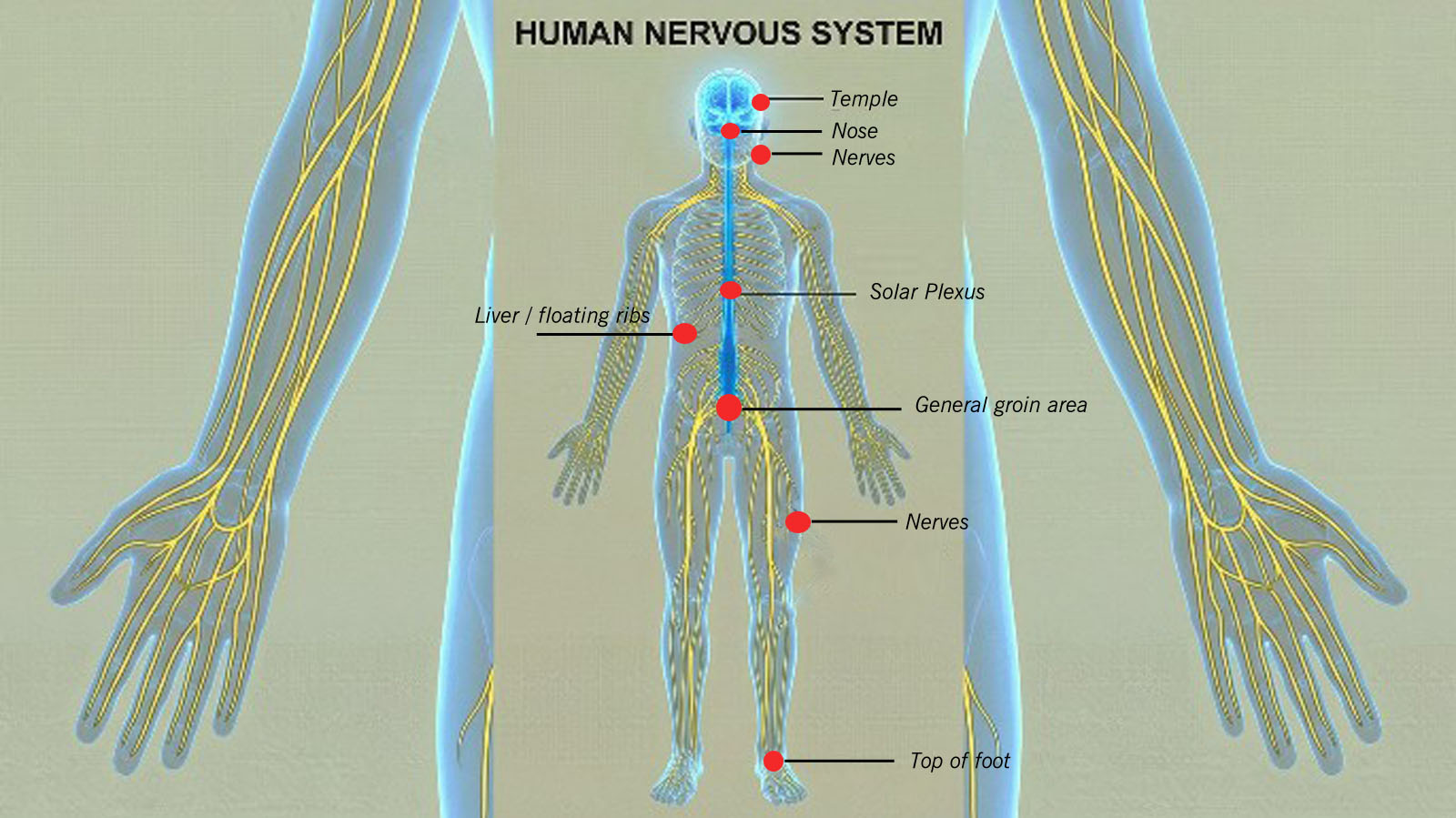
Picking the “right” targets is just as important as being able to strike hard. In fact, it was demonstrated in class that it doesn’t matter how much muscles you have or how hard you can hit, being able to get there is the most important thing. You cannot cause damage without contact. The picture at the top of the article highlights some of the “soft” targets that can cause you to wince even with a finger pressing firmly.

Note: One of the challenges for many seniors is hand arthritis, which can result in pain, weakness, or deformity in the fingers and hands. It is not reasonable to assume that you can always form a tight fist capable of injuring an aggressor. In such circumstances, palm strikes, elbows, or shoulders may be more practical and effective options.

Slaps

This is the first time we will use pads to develop a sense of how to deliver a solid strike. This process will continue to evolve over time. It is essential that we always respect our own bodies as well as our training partners.

  • Start slowly and lightly, then gradually increase speed to develop power.
  • Give your joints and hands time to adapt to the impact.
  • Avoid developing bad habits, such as winding up before striking. Do not telegraph your intent; strike directly from where your hands already are.
  • Swing with your entire body, not just the arms.
  • Ensure that contact with the pad is perpendicular.

Tagging

A lot of people think mis-direction, feinting or faking an attack are all the same. We call it “tagging”. All those are simply sub-categories within “tagging”. The goal of tagging cause a moment where your opponent is frozen, confused, in a state of im-balance, overwhelmed, misdirected, over committed, jammed and much more. With good tagging, any hits can work.

SCENARIOS

Pad facing ceiling – the downward force is the easiest to learn to feel how gravity can help with the swing. It is important to learn the small moves of the body like: how to focus on the speed of the elbow, how to relax the spine into a sinking motion and the bending of the knees to add weight to the hit. If you stiffen your body, your arm will probably go slower and less of your body weight get transferred to the hand / target.

Pad facing the side held about head height – this intend to provide a target similar to opponents face or head. In this exercise, start slow and understand the path of the arm swing and how stepping into the hit and turning the body helps release more power.

EXERCISES

Misdirection, feinting, or faking an attack are all separate ways to confuse your opponent. We group these under the term tagging. Tagging can also be just an expression on the face, eyes looking away, whisper / yelling, a small shovel and many more. The objective of tagging is to create a brief moment in which the opponent is frozen, confused, off-balance, or overwhelmed. It aims to create an opportunity for open access to your intended target.

REALITY CHECK

You are learning to defend yourself. Is that the same as learning how to fight?

The answer is less clear-cut than you might hope. You are learning tools that allow you to hurt an opponent. Can I guarantee that you will be safe in all situations? Definitely not. Through training and understanding, you increase your probability of surviving an attack—but that probability is never 100%. This is similar to anything in life, always try your best, there are no guarantees.

Even striking a hard surface can hurt. Win or lose, you must be prepared to experience pain and not be surprised by it. If pain is triggered, you must not think, “Oh, this hurts.” Instead, your focus should be on delivering the message: This is going to cost you—it is not going to be free.

SSD – Class notes 2025-12-04

DISCUSSION

Various Steps Explained

Stutter steps – this meaning repeating the front leg’s action of stepping as front. It is often used when you want to add more body weight to your push or strike at close range without changing the lead foot.

Gallop steps – Gallop steps conserve energy and can be performed high (with legs relatively straight) or low (close to a low stance). Their main advantage is that they allow you to cover long distances without the exposure that comes from switching your lead leg.

Angling tuck steps – this step is to most often used in conjunction with the upper body’s avoidance action of a hit to the head when your upper body instinctively ducks or moves off the line of fire. The leg moves in the same direction to amplify that evasive action. The movement is fast because it is a tuck powered by your core plus gravity. Since your support leg leaves the ground, gravity helps pull you in the direction your body is already moving.

Go with the flow, do NOT RESET

Striving for perfection is a good mindset, but it can also become a handicap. Imagine a writer trying to create the perfect novel—very often they freeze, second-guess themselves, and tear up draft after draft. Or imagine trying to teach a baby to walk perfectly on the very first day; it would be frustrating for both you and the baby.
To succeed, you must stay focused on the end goal, not the bumps and struggles along the way. In a fight—or in any challenge—you must be ready to take hits and keep going. Do not stop because of small setbacks or small successes. Continue until the job is done.

A better approach is to continuously get them to try continuously, keep trying and keep it safe.

Train to Be a Warrior

  • Heart (Passion) – You must care about something: yourself, your quality of life, your principles, or the people who care about you. That passion drives you to do whatever it takes to protect what matters.
  • Accountability – Wishing is not enough. You must take ownership of the work required to make things happen. You do not blame others; you focus on what you can do to improve the odds. You avoid procrastination and keep yourself ready—even if the opportunity appears for only a split second.
  • Toughness – Training is sometimes painful. Change is difficult. Survival is hard. Face challenges now so that you are ready to be tough when it truly counts.

SCENARIOS

Push is a very useful maneuver when you don’t really want to injure the opposing party. Care must be taken that even a push without any intention-to-harm might accidental cause significant damage. For example, if on the street, the person falling hit the back of their head on concrete; or someone fell backward and landed on their tailbone.

Some common mistakes with this push partner drill:

  • Start pushing at maximum
  • Stand square facing your partner
  • Body not working as ONE
  • Arms over bent into an acute angle or too extended during the push

EXERCISES

As we have seen many times, the right mindset can transform the mechanics and delivery of a movement. Apply this to the push exercise by focusing on maintaining the integrity of your whole body rather than extending the arm or creating unnecessary tension in your arms or abs.

While keeping the pressure constant, see if you can reduce the tension in your arms and body without decreasing the force you deliver. Do you notice that when you slightly relax your back into a gentle slouch, you can actually deliver more power without adding muscle tension?

Can you try to do the plank now and play with varying tensions on different parts of your body?