
DISCUSSION
Relax the body to learn
Intellectually understanding something is very different from being able to do it instinctively. Most people, when they hear the word “strike,” reflexively tense up. Do not add power until you know you are doing the movement correctly, or you will build habits that are very difficult to change later.
Some of the key challenges for beginners include:
- Unnecessary tension in the shoulders
- Elbows flaring outward instead of staying relaxed and down
- Keeping the body tight instead of “relaxing into” one’s own structure and center
- Overuse of stabilizing muscles, causing one muscle group to fight against another
- Failing to slightly tuck the chin, which opens the throat to strikes
- Strikes moving side by side instead of hand over hand
- Strikes traveling too flat or downward, rather than slightly upward so that action–reaction helps anchor you instead of lifting you
- Leaning to generate power, which adds little benefit and increases exposure; staying centered is more effective and safer
- Forgetting to reestablish guard after striking
- Underuse of the legs and whole-body connection
Train the brain first
We have demonstrated how important it is to change reflexive responses when working on escaping wrist grabs. Many people automatically tense up, even when practicing with a cooperative partner. We have shown and discussed how tension alters mechanics, and how using tension in the wrong places actually causes you to work against yourself.
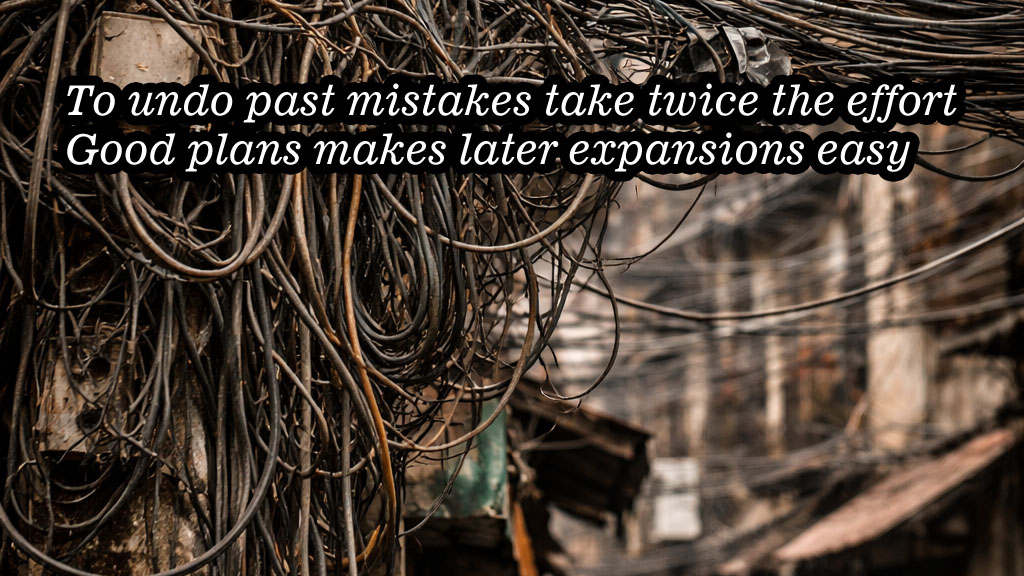
Your brain can only process a limited number of commands at one time, especially when learning something new. Relaxing and slowing down gives your brain the time it needs to send the correct signals and allows you to self-assess what you are doing. Blindly adding muscle does not speed up learning; more often, it programs incorrect neural pathways. Once those patterns become habits, not only was the training time wasted, but correcting them later requires more than twice the effort.
Importance of the lines
- Straight line – during the strikes, we want the line to be straight where possible so that we arrive fast via the shortest path
- Circular line – sometimes you have to take a semi-circular route to have better control or sometimes to simply move out of the way. For example, the windshield wipers move in semi-circle to cover a big area with a single stroke.
- Structural line – the line of support is often referred to as structural line. For example, for a person standing up, the structural line is vertical thru the upright axis.
- Point weapon to target line – as a concept, the weapon can be anything anything from your fist to possibly a knife or a gun. Police are taught not to point their gun to anyone unless absolutely necessary to avoid accidental misfire. However, when you are in the midst of a combat, you should point to the potential target.
SCENARIOS
Pressuring your opponent backwards
We are attacking the opponent’s weak structural line so that they have no option but to step back and rebalance. This pressure must be continuous; you should not pause or “wait and see” between steps. Through your controlling arms, you should be able to feel where the opponent is structurally strong and where they are weak, and adjust your pressure accordingly.
Use of elbow
The elbow has the disadvantage of limited reach; you must be very close to your opponent to make contact with the target. However, it has the advantage of being extremely strong and effective. The tip of the elbow concentrates force into a very small area, which means the impact can generate significant pressure and cause serious damage.
We begin with the right elbow and learn three strikes: across from right to center, top down, and bottom up. As before, apply the same learning process—start from the guard, slide in, and experiment with different leading legs. Use your hips to generate rotation, and perform the movements slowly and loosely. Focus on experiencing the motion rather than forcing power. We will go into greater detail next week.
EXERCISES
- Repeat exercises from last week for body conditioning.
- Stretch and move your shoulder to get your body ready to learn elbows without hurting yourself.
SIDE NOTES