DISCUSSIONS
We don’t always have the luxury of having an extra 10–15 minutes before class to warm up or ask questions. However, we are fortunate that no one is ahead of us in the program. I encourage everyone to take advantage of this opportunity. Ultimately, fighting and survival are about the ability to see and make use of opportunities as they arise.
Structural versus muscular power
When you perform an action such as standing or lifting, you are of course using muscles—but the focus should be on the intent or function you are trying to achieve, not on the muscles themselves.
Bodybuilders, for example, tense muscles on both sides of a joint. This makes them look bigger but actually limits speed and fluidity of movement. Our goal is not to show off muscle size but to make movements effective and functional. This is called technical relaxation—using only what is necessary for the task without unnecessary tension.
A few key comparisons:
- You don’t tire easily when relying on structural power. When relying solely on muscular power, fatigue sets in quickly unless you’ve trained specifically for endurance.
- Structural power requires no reaction time when your body’s shape and alignment are already positioned to handle force from that direction.
- As seniors, if you lack muscular strength, you must substitute it with power generated from other sources, as discussed below.
- Muscles are still essential for daily activities such as standing, balancing, climbing stairs, and carrying groceries. Keep exercising to slow natural deterioration.
- Those who bully you at your age are likely bigger and faster. Competing through muscle alone is not the best strategy—structure and technique are your advantage.
Escalate only when it is absolutely necessary
An ethical approach is paramount to acquiring fighting skills. You must understand the responsibility that comes with the skill. Any physical action, like punching someone, has repercussions. The mindset should be to start with the ‘gentle side’ rather than escalating a situation. This philosophy is a core part of the training, taught to prevent misuse of the skills learned.
Wavering between ‘fight-or-flight’ will guarantee a bad ending. You need to think ahead where your red-line is. Even if you decide not to fight, you must position yourself strategically: for example, maintain a good distance between you and aggressor; furthermore, are you repositioning yourself to a safe spot after every effortless skill? Can you redirect the body angles to something less aggressive?
Functional focus vs muscle contraction focus
When you stand, you don’t really know you are using muscles but you are. You don’t need to focus on naming the specific muscles or the contraction of any muscles. Any focus on tensing up any specific muscles is over doing it and may be applicable only if training those muscles is the purpose.
How to get yourself stronger?
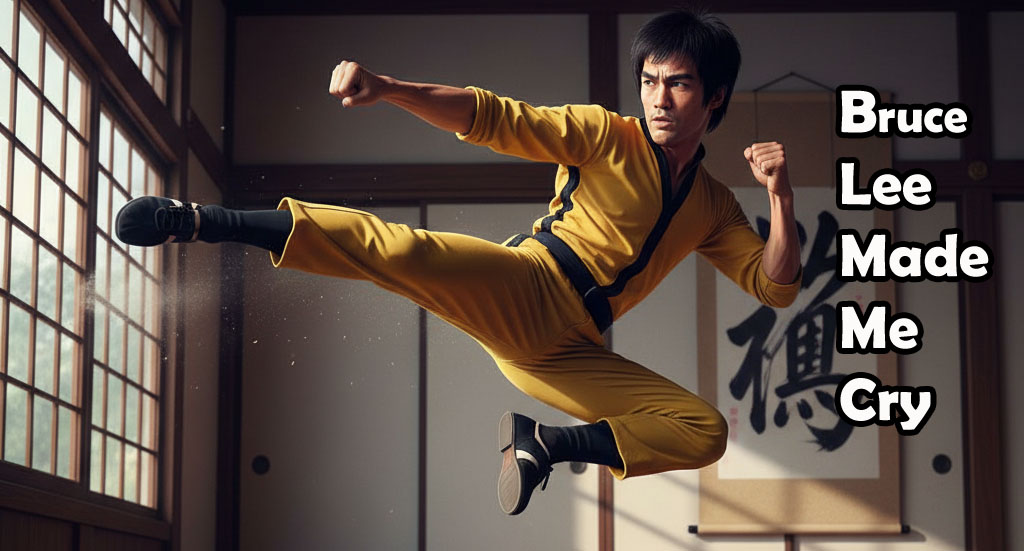
Remember this phrase: “Bruce Lee Made Me Cry.”
(The first letter of each word represents one of the key categories.)
- B – Big muscles: These major muscles do most of the visible work. When training alone, people often focus only on these large muscle groups.
- L – Little muscles: Smaller stabilizing muscles engage when the large ones tire out. Because they’re weaker and less coordinated, fatigue often shows as shaking in certain parts of the body.
- M – Mind: We demonstrated the power of the mind through the firehose projection experiment. Changing what or where you focus dramatically alters the outcome.
- M – Mechanics: Familiar principles such as leverage, angles, and structure all influence how efficiently you use your strength.
- C – Coordination: The difference between a trained unit of soldiers and an unorganized group is coordination. When an order comes, trained soldiers act cohesively. Likewise, a trained body functions as a coordinated team—each part working in unison toward a single goal.
By projecting your intent and structure together, you force the opponent to deal with your entire body’s mass and alignment, making your technique far more effective.
SCENARIOS
“Being shoved from behind (or pulled from front)”
- Go with the flow to absorb the force
- Push the butt backwards to counterbalance the forward momentum of the upper body
- DO NOT start with bending your leg as that accelerates the descend
- Each of the following help reduce the impact of the fall: 1) going with the force helps reduce the force forward 2) pushing the butt back help reduce the weight on the front of your support 3) halving the body helps reduce your height 4) the net of the velocity backward and the upper body pushed forward is a lot less
If you have trouble distinguishing between pushing your butt back and leaning your upper body forward, stand about eight inches from a wall or similar obstacle. Then, gently push until your buttocks touch the wall—without leaning into it. Your upper body should lean forward just enough to counterbalance the backward motion of your hips.
“Two hands on shoulder” – We used this scenario to show how you can neutralize a much stronger opponent’s grip without direct resistance. The key mechanic here is similar to a door stopper or a pebble in the track of a sliding door—a small but strategic action that disrupts movement.
“What if it change to grabbing your shirt?” – When a conflict escalates to a point where an effortless solution is no longer possible, you may need to respond more assertively. For example, I might reach out and press on the opponent’s throat while stepping toward them to regain control and space.
EXERCISES
You don’t always have a partner feeding you pushes or grabs. So it is important to be able to work independently as well as work with a partner when you have a chance.
Reference points and projection – When discussing leverage systems, there is always a pivot point—like the center of a seesaw. The pivot remains fixed, and the board must be straight and strong. We simulate this by projecting a line of force from the belly button through the fingers. In some cases, such as the door stopper example, you need to prevent the opponent from moving with you to create an opening for escape.
Isolation and integration of different body parts – Work on moving individual parts of the body independently. For example:
- Draw circles with your shoulders, both forward and backward.
- Try arm circles—one arm forward while the other moves backward.
Caution: Move slowly and mindfully. Don’t hurt yourself.
Squat – Stay in a squat position until your legs start to burn and shake, then sustain it for an additional count of eight. This builds both strength and mental endurance.
Do you know why we keep the back parallel to the ground in this squat?