DISCUSSION
Amplifying the slap
Breathing / movement of ribs to absorb
The rib cage can be moved with breathing but it can also stay relatively static. The movement is almost like a folding action downward as can be seen via the animation below. This phenomenon can actually be applied in martial art skills. The amplitude of this movement can be increased over time through practice.
Pain conditioning
If you think about a chess game, you will lose some pieces even if you win at the end. This is the same in another other sports like tennis, basketball, etc. In fighting, each of the point that was lost represents a hit that landed and therefore will cause pain. Do be ready for it. If you are in shock because of a single contact, you are guaranteed to run into problems: everything you learned will be out the window.
Some body parts that everyone that do martial arts train pain tolerance:
- knuckles, palm and elbow for attacks
- shin and thighs for defense
- forearm and upper arm mostly for defensive moves
- tummy to be able to take some hits
SCENARIOS
High grab on slightly higher than wrist
The last time, we were doing this scenario but with the grip below the wrist. However, one of the pairs have trouble making it work when the grip is partly on the hand itself and not on the wrist.
To get out, instead of bend the wrist down, wrap your thumb around your opponent’s thumb. This is cause his thumb to lose its support / anchor and roll inward. That will loosen his support and therefore give you the opportunity to press and get away.
EXERCISES
Keep yourself fit over the holidays!
MISCELLANEOUS
Do you understand the differences between the following:
Martial Arts — A broad, generic term that encompasses all fighting styles.
Kung Fu (or Gung Fu) — A term for martial arts that originated in China and that still retain many traditional training methods and core principles.
Mixed Martial Arts (MMA) — Many people assume that UFC and MMA are the same, but they are not. UFC is a specific promotional franchise for MMA competition. There are many others, such as ONE Championship, Cage Warriors, and more.
Karate, Aikido, Judo — Japanese martial arts styles. Although their historical roots can be traced back to China, they developed distinct emphases, structures, and training methodologies that are clearly Japanese.
Internal Styles of Kung Fu — The term “internal” refers to an emphasis on elements that are not easily visible, such as alignment, timing, and coordination. Many people doubt their practicality in real-life situations. However, if you are fortunate enough to learn from a good teacher, you will find that many of the principles and training methods make complete sense. Well-known examples include Taiji (Tai Chi), Bagua, Xingyi, and Liuhebafa.
External Styles of Kung Fu — The term “external” generally refers to styles that emphasize muscular power, speed, and physical expression, often resulting in movements that are visually impressive.
Why do I like martial arts so much?
My uncles were involved in a style called Wing Tsun (永春). My grandfather dabbled in Tai Chi. Whenever I visited him, his way of “bonding” with me was often, “XXX (my nickname), come and push me—you can’t move me.” My mother would sometimes read martial arts novels (武俠小說) to me as bedtime stories. A couple of translated Japanese television series about judo training (柔道龍虎榜, 柔道小金剛) from the late 1960s and early 1970s further fueled my intense interest.
Because my teachers came from different backgrounds and styles, it was challenging to reconcile their differences. I often wondered whether anything I was being taught was wrong. At that time, the primary method of learning was imitation—copying the teacher—so the emphasis was on how to do something, with little explanation of why it was done that way or what problem it was meant to solve. As a result, learning kung fu felt very much like solving a puzzle. You were given hints and clues through old Chinese poems passed down from generation to generation.
Later, during high school and university, I began to find some of those answers through my studies in physics, psychology, sports science, anatomy, and related fields.
I have always considered Liuhebafa to be my “home” style. My experience with other martial arts enriched my understanding and provided inspiration and alternative approaches to the art of fighting. During high school, protective equipment was still quite expensive, so my friends and I sparred bare-knuckled. I accumulated plenty of bruises to my body and legs, and I nearly lost a tooth once.
Those experiences are what keep me grounded. I want to ensure that what I practice and teach does not become merely another form of exercise for health alone—it must retain real fighting value.
Why I like teaching these classes
You may find this hard to believe, but I continue to learn and improve through teaching. The more people I teach and connect with, the greater the variety of behavioral patterns I observe. I also gain experience interacting with individuals of different sizes and body types. Each of you is unique, and when something does not work for you, I need to “debug” the issue immediately—this sharpens my eye and deepens my understanding. A single explanation or teaching method does not work for everyone.
I had a wake-up call when I was teaching children and realized that none of them knew who the Terminator was. Ultimately, it is always rewarding to help you overcome learning hurdles and to see a technique begin to work effortlessly for you.
2025 is a wrap!
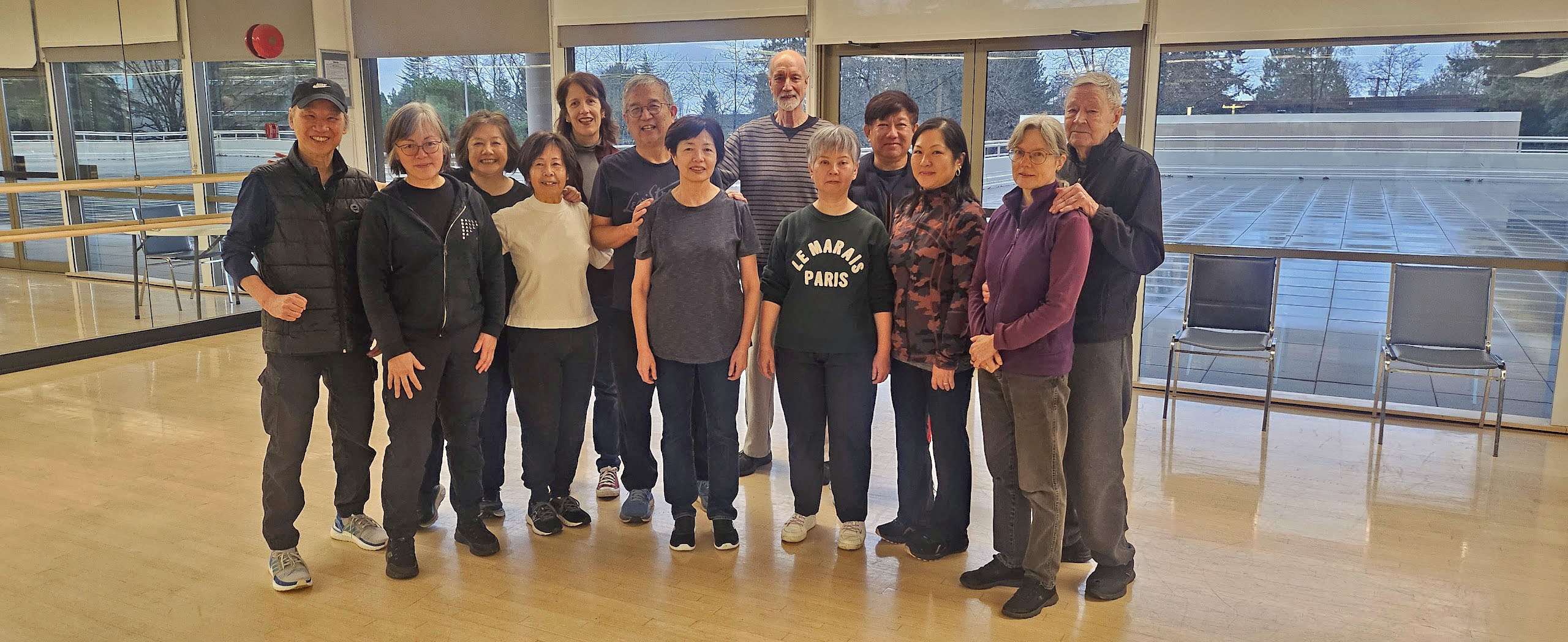
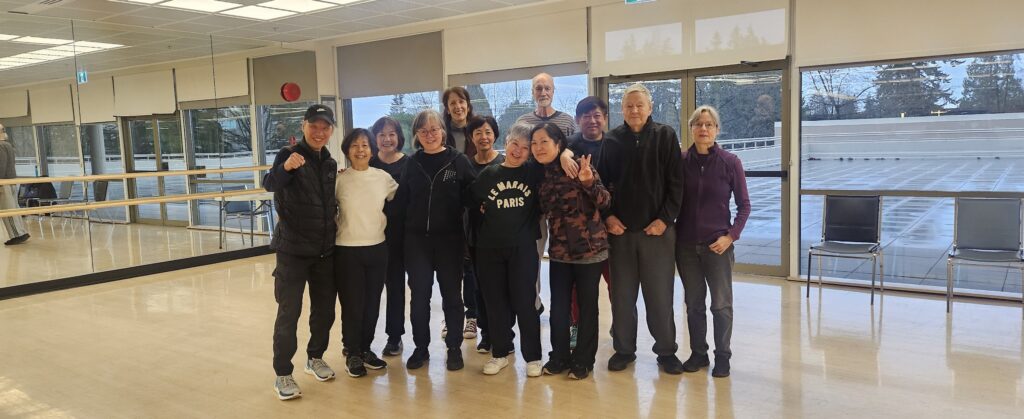
This is the first year I have tailored my martial arts teaching specifically for seniors, and it has been a truly enjoyable journey. I hope we can continue working together for many years to come. Ultimately, I am passing on valuable knowledge that has taken me decades to develop—more than 60 years, to be precise. I hope this helps explain why it is impossible to condense everything into just a few weeks of classes.
Internal martial arts can be challenging and often seem cryptic to those unfamiliar with them. Many of the principles and approaches contradict practices that may have served you well for the past 50 years or more. However, as a senior, your body is changing. I am asking you to turn things around and adopt a different approach—one that can continue to serve you well in the years ahead. I know this is challenging, but I also know it is possible.
Thank you all for your trust and attention, and for your willingness to absorb even the smallest details. Thank you for making Thursdays such an enjoyable day for me.
To help me plan for 2026, please share what was the best part (or what do you like most) about these classes? Thanks.