
DISCUSSION
Partner work
You need good partners to excel. Learn to be a good partner! In partner drills, one person feeds and the other person respond. Here are key points to being a good partner:
- Communicate clearly. Make sure both of you understand the scope, speed, and force of each drill to establish clear expectations.
- Help each other learn. Work together to refine techniques through repetition and gradual increases in difficulty.
- Respect comfort zones. Everyone’s comfort level is different. As the feeder, create a supportive environment so your partner can adapt and learn effectively.
- Analyze together. Discussing why a technique didn’t work benefits both partners. It helps train your eye to spot mistakes and reinforces key points for improvement.
- Own the technique. Knowing a move is different from owning it. Repetition is the key to making your responses automatic.
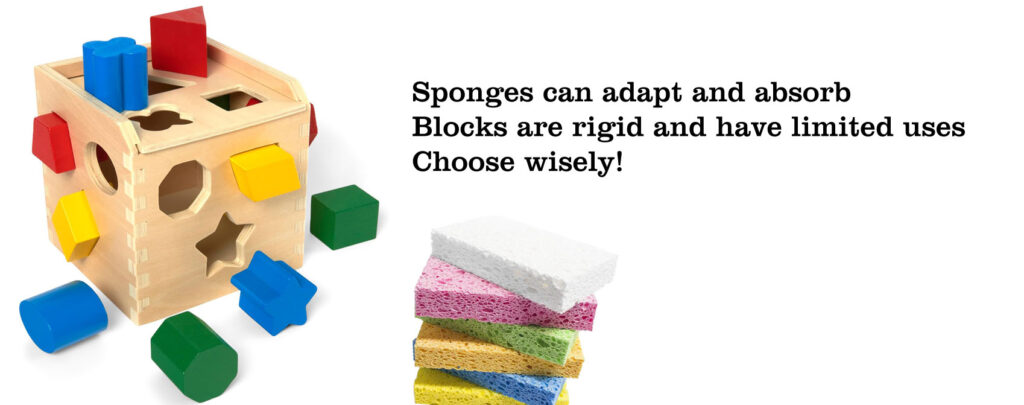
- Be patient and courteous. Everyone learns differently. What seems simple to you now might have been confusing once too. Show the same patience you’d want others to show you. Remember, speaking louder doesn’t help someone understand better — rephrasing your explanation often does.
- Take it seriously. You are all learning techniques that could save lives. Not having — or not being — a good partner can deprive someone of the chance to develop life-saving skills.
De-escalation Strategy
Even world-class athletes sometimes fall behind in a match — what matters is their ability to recover. Likewise, in real-life confrontations, some strikes may get through. You need both mental and physical resilience to push through pain if necessary.
Still, the best outcome is always to de-escalate when possible. Here are some techniques:
- Change your positioning. Move from a face-to-face confrontation to the person’s side, facing the same direction.
- Stay calm, relax and assess. Relax first. Your tension can trigger further escalation. Read the situation — what resources are nearby? What’s the person’s end goal? Is time on your side? Do you have room to move?
- Avoid telegraphing your intent. Don’t fight strength with strength; operate subtly and stay under their radar.
- Use calm communication. Speak softly and look for common ground, e.g. “I’m sorry — I’m having a rough day too…”
Strategic Positioning (Situational Awareness)
- Avoid standing near the edge of train platforms or at the tops of stairways. A single bump could send you over the edge.
- Maintain a good field of vision. Don’t walk too close to blind corners in streets or supermarket aisles. Staying at least an arm’s length from edges and obstacles gives you time and space to react.
- Avoid keeping your hands in your pockets — they could get trapped if you fall.
- Stay aware of your surroundings. Know who and what is near you, and look ahead for potential risks.
Application of “Perpendicular”
The concept of perpendicular force applies to both offense and defense.
In offense: A punch or kick that lands perpendicular to the target surface maximizes impact.
Rather than pushing directly against strength, redirect force to where resistance is minimal — this allows small movements to overcome larger forces.
In defense: Applying force at a 90-degree angle to your opponent’s line of attack meets minimal resistance and can easily disrupt their balance.
SCENARIOS
Reviews
Remember the phrase: “Please Practice Relax First.”
The following grips were reviewed and practiced with different partners:
- Low cross-over (thumbs up) grip
- Low cross-over (palms down) grip
- Low same-side grip
- High cross-over grip
Common mistakes :
- Failing to follow up to reach a strategic position
- Not staying close enough to maintain control of the opponent
- Trying to yank the wrist away or lift the opponent
- Lack of coordination — body parts must move in unison for maximum efficiency
- Confusing “relaxed” with “limp”
- Telegraphing movements
EXERCISES
Continue working on all mobility and strengthening exercises from previous classes regularly.
Thank you for all of your effort in putting these notes together for us. They help me to keep my mind more focused on the lessons and the principals of your instructions. By going over these, I have come to realize the importance of reading them as a review and, even more importantly, as a refresher of the class teachings in my day to day activities and thoughts. I stay more connected that way.